19 Valley of the Kings Tours | Luxor Private Tour & Tickets

The Valley of the Kings

Egypt Tours Club

Luxor planning · West Bank tombs · Complete Egypt tour packages

Valley of the Kings · Luxor West Bank · Royal Tombs · New Kingdom

Explore the Valley of the Kings in Luxor

Plan a focused visit to the royal necropolis of Ancient Thebes on Luxor’s West Bank. Choose a small number of priority tombs, understand how changing tomb access works, and leave enough time for heat, walking, stairs and nearby West Bank sites such as Hatshepsut Temple.

Quick Travel Answer

How should you visit the Valley of the Kings?

For most first-time visitors, allow roughly 2–3 hours, choose a small number of priority tombs instead of rushing every available option, and visit early when practical to reduce heat exposure. Tomb openings, supplementary tickets and photography rules can change, so verify current official conditions before arrival.

A useful first route is to check the day’s open tombs, choose one or two high-priority tombs plus another with contrasting decoration or layout, take a short rest between entries, and then continue to Hatshepsut Temple and the Colossi of Memnon if your pace allows.

Understand the Royal Valley

Essential tombs, beliefs and landscape clues to notice

The Valley of the Kings is more than a list of famous pharaohs. Its rock-cut architecture, funerary books, astronomical ceilings, hidden desert setting and changing tomb access reveal how New Kingdom rulers imagined death, divine protection and rebirth.

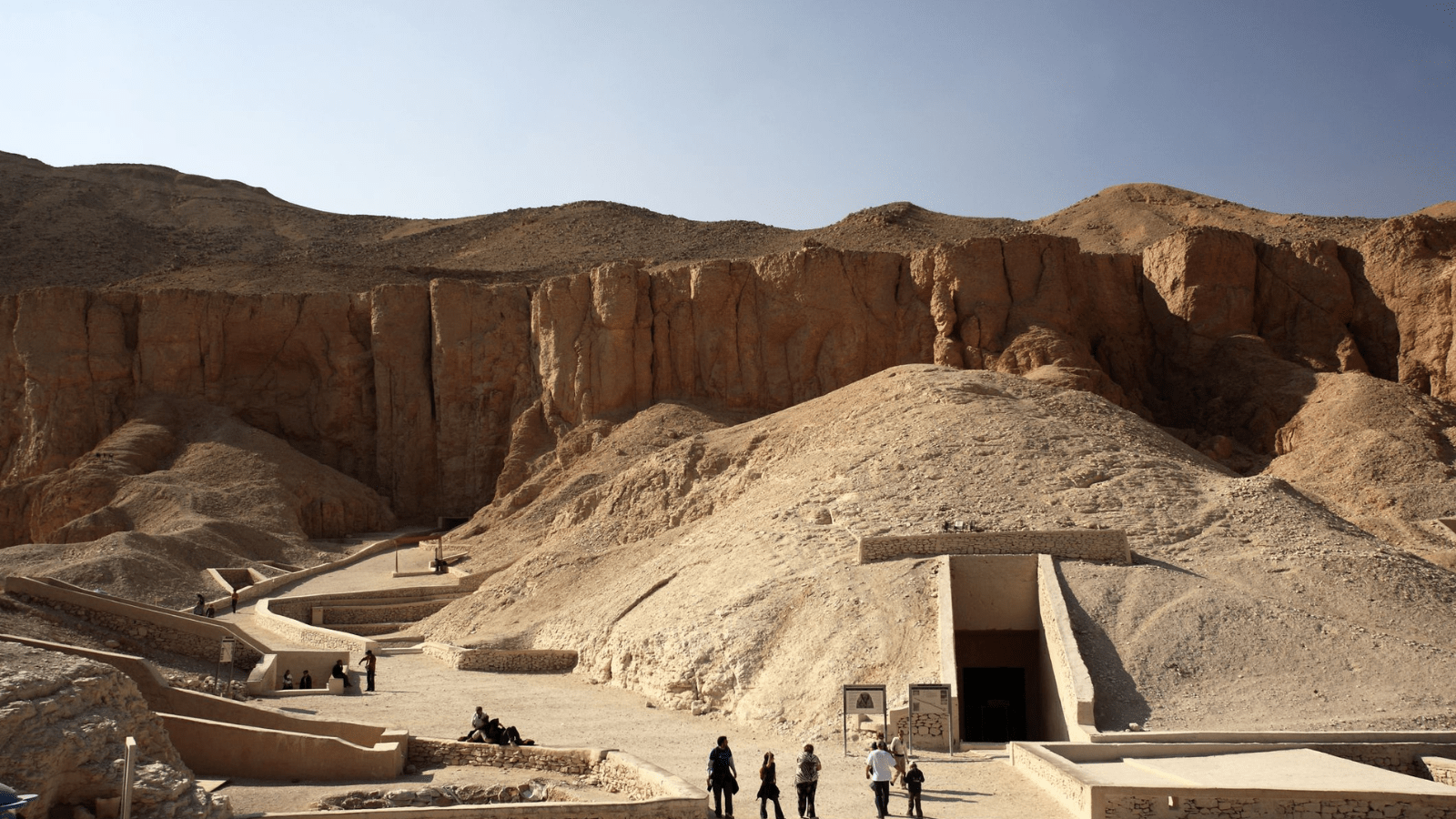
Desert cliffs and landscape of the Valley of the Kings on Luxor's West BankRoyal Necropolis

Why the Valley Was Chosen

West BankNatural pyramid

New Kingdom rulers shifted from highly visible pyramid monuments to hidden tombs cut into a secluded desert valley. The western horizon symbolized death and regeneration, while Al-Qurn—the pyramid-shaped peak above the valley—added powerful funerary symbolism. The isolated geography was also intended to make royal burials harder to rob.

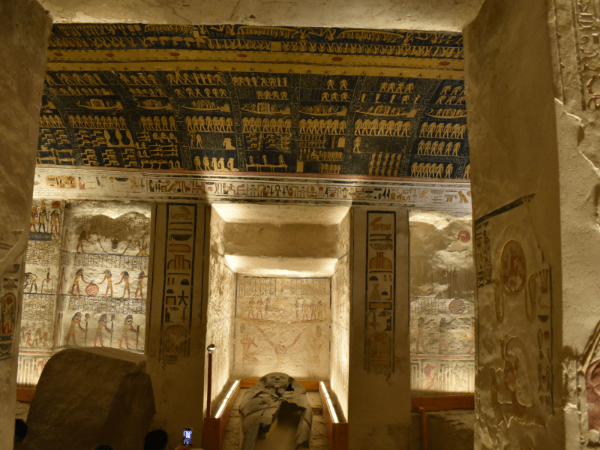
Painted royal tomb chamber with astronomical ceiling in LuxorAfterlife Texts

What the Tomb Paintings Mean

AmduatBook of Gates

The painted walls were not decoration for decoration’s sake. Gods, boats, serpents, gates, stars and sacred texts created a religious map for the king’s journey through the night. Compositions such as the Amduat, Book of Gates, Book of Caverns, Book of the Earth and Books of the Heavens explain divine protection, solar regeneration and royal rebirth.

KV62

Tomb of Tutankhamun — KV62

1922 discoverySpecial access

Howard Carter discovered Tutankhamun’s tomb in 1922 during excavations funded by Lord Carnarvon. The tomb is comparatively small, but the survival of so much burial equipment made the discovery one of archaeology’s defining moments. Visit it for its historical significance rather than expecting the valley’s largest or most elaborate interior.

Painted chamber inside a royal tomb in the Valley of the KingsKV17

Tomb of Seti I — KV17

19th DynastyExceptional art

Seti I’s tomb is one of the valley’s most celebrated royal monuments, with deep corridors, extensive chambers and a rich decorative program of funerary compositions. Because of its artistic importance and conservation needs, access is typically managed separately from standard valley admission. If open, it is a strong choice for travelers focused on Egyptian art and tomb architecture.

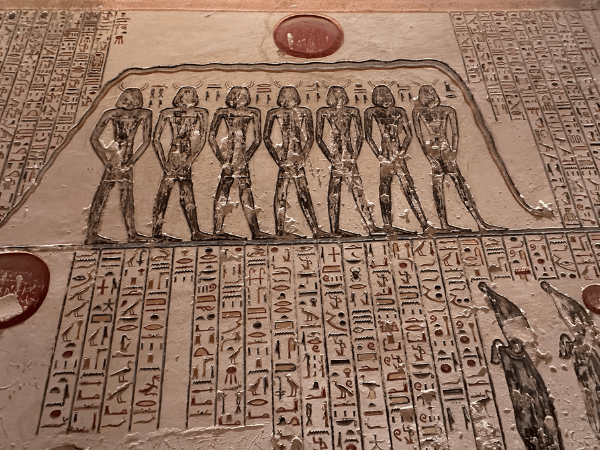
Ancient Egyptian wall scenes and hieroglyphs in a Valley of the Kings tombKV9

Tomb of Ramesses V/VI — KV9

Astronomical ceilingsFunerary books

KV9 was begun for Ramesses V and enlarged for Ramesses VI. Long descending corridors lead to a spectacular burial chamber, while painted sunk reliefs preserve major funerary compositions. It is especially valuable for understanding the sun god’s night journey, the structure of the underworld and the king’s hoped-for rebirth at dawn.

Decorated royal tomb interior representing Ramesside tombs in the Valley of the KingsTomb Selection

Ramesses III, Ramesses IV & Rotating Tombs

KV11KV2

Ramesses III’s KV11 and Ramesses IV’s KV2 are useful examples of Ramesside tomb design when open. KV11 combines scale and painted funerary decoration, while KV2 has a clear descending plan that makes the progression toward the burial chamber easy to understand. Rotating openings help protect fragile painted surfaces from humidity, dust, carbon dioxide and heavy visitor traffic.

Plan the Visit

Choose tombs by interest, effort and current access

The strongest first visit is selective. Decide what matters most before arrival, then adapt the route to the tombs that are open and the physical effort you are comfortable with.

Understanding the Valley of the Kings

The valley is a New Kingdom royal necropolis within the Theban Necropolis on Luxor’s West Bank. Rock-cut tombs replaced the highly visible pyramid tradition for many rulers, combining religious geography, royal funerary beliefs and attempts at greater burial security.

How the tombs work

Tombs are identified by KV numbers, and the set open to visitors can change. General admission may cover a selection of standard tombs, while some high-demand or special tombs can use supplementary entry. Check current official information rather than relying on an old list.

Which tombs should you prioritize?

Choose by preservation, decoration, historical importance, physical effort and current access. A balanced first visit usually works better than chasing the maximum number of tombs in the shortest time.

Tutankhamun — KV62

Tutankhamun’s tomb is historically famous because of the discovery of his burial assemblage and the survival of the royal burial. Access arrangements can differ from standard tomb entry, so verify current conditions before planning around KV62.

Ramesses VI — KV9

KV9 is often prioritized for its richly decorated corridors, funerary texts and astronomical ceiling imagery. Its visitor value is visual and interpretive, but current access and ticket arrangements should still be checked close to the visit.

Seti I — KV17

KV17 is one of the most celebrated royal tombs for scale and decoration. Do not assume it will always be available or included in standard entry; check current access before making it essential to your day.

Other notable tombs

Open tombs can include different Ramesside royal burials and other important examples. Use the day’s available list to choose contrasting layouts and decoration rather than treating one fixed online ranking as permanent.

Suggested first-visit route

Arrive, confirm the open-tomb list and any supplementary entry, visit your highest-priority tomb first, add one or two contrasting tombs, pause for shade and water, then leave enough energy for Hatshepsut Temple or other West Bank stops.

Tickets & tomb access

Ticket prices, tomb rotations, special-entry rules and photography policies are operational details that can change. Check current official information close to the travel date and confirm exactly what a guided tour includes.

Check official Valley information

Best time to visit

Earlier parts of the day are often more comfortable because the valley is exposed and can become very hot. Seasonal conditions, crowds and site operations vary, so treat early arrival as practical advice rather than a guarantee of low visitor numbers.

Photography tips

Use exterior views for the desert cliffs and tomb entrances, and follow current on-site rules inside tombs. Never assume older reports about cameras, phones, tripods or flashes still apply.

What to wear & bring

Use supportive shoes, light practical clothing, sun protection and water according to current site rules. Tomb corridors can include steep slopes and steps, so footwear matters more than formal dress.

Visiting with children

Keep the tomb count selective, build in shade and rest, and avoid pushing through too many interiors when heat or attention drops. Narrow passages and steps can make some tombs less comfortable for younger children.

Accessibility & mobility

The site involves outdoor walking, slopes and tomb interiors that may include steep or confined passages. Accessibility differs by tomb and current arrangements, so verify support options and choose the route around the traveler’s actual mobility.

Local expert advice

For a first West Bank visit, protect your energy for the tombs first, then add Hatshepsut Temple and the Colossi of Memnon. Extra tomb areas such as Valley of the Queens or Deir el-Medina are better when you have enough time for a deeper West Bank day.


Official and Authoritative Sources

Know what is stable — and what to verify before you visit

The history and archaeological context of the Valley of the Kings are stable. Tomb openings, supplementary access, photography rules and ticket arrangements are operational details that can change. Use the sources below for the right type of information.

Stable facts you can plan around

These points do not depend on daily operating decisions and help you understand the site before choosing individual tombs.

Ancient Thebes context The Valley of the Kings forms part of the wider Theban Necropolis on Luxor's West Bank and the UNESCO Ancient Thebes landscape.
New Kingdom royal necropolis The valley was used for royal burials during the New Kingdom, with tombs cut into the desert cliffs rather than built as visible pyramids.
KV tomb numbering Tombs are commonly identified with KV numbers, such as KV62 for Tutankhamun, KV9 for Ramesses V/VI and KV17 for Seti I.
West Bank pairing Hatshepsut Temple and the Colossi of Memnon are the most natural first additions to a focused Valley of the Kings route.

Check these details close to your visit

These items are operational rather than permanent. Do not plan from an old screenshot, cached travel article or outdated ticket list.

Which tombs are open? Open tombs can rotate for conservation, restoration or operational reasons.
Supplementary tomb access Tutankhamun, Seti I or other special tomb arrangements may use separate access categories and can change.
Photography rules Rules can vary by tomb, equipment type and current on-site policy. Follow current signs and staff guidance.
Tickets and visitor hours Use the official ticket portal and Egyptian monument sources for the latest available information before arrival.

Which source should you use?

Match the source to the question

Site history Egyptian Ministry Use for archaeological background, site context and official monument information.
World Heritage UNESCO Use for the Ancient Thebes and Theban Necropolis heritage context.
Current admission Official Ticket Portal Use for current ticket categories and special-entry information where published.
Route planning Egypt Tours Club Use for practical tomb priorities, heat, pacing and combining the valley with other West Bank stops.
Planning rule: build your itinerary around the Valley of the Kings itself, not around one specific tomb being open. Choose 2–3 priority tombs, keep a backup choice, arrive with current ticket information, and leave enough time for Hatshepsut Temple or another West Bank stop without rushing.

Company and Operator

Who is behind Egypt Tours Club?

Keep the traveler-facing brand and the licensed operating company clearly distinguished.

Egypt Tours Club

Egypt Tours Club is the traveler-facing travel brand operated by Vagus Travel Co. It provides destination information, private tours, day trips, Nile cruises, multi-day packages and tailor-made trip planning.

  • Traveler-facing Egypt travel brand
  • Private Luxor day tours, packages and tailor-made planning
  • Local support for Luxor, Nile and wider Egypt routes

Useful Travel Answers

Valley of the Kings questions before you go

Direct answers for tomb choice, timing, heat, photography, mobility and West Bank planning. Verify current operational details with official sources before travel.

What is the Valley of the Kings?

The Valley of the Kings is the New Kingdom royal necropolis on Luxor’s West Bank, where many pharaohs and some members of the royal household were buried in rock-cut tombs.

Where is the Valley of the Kings?

It is on the West Bank of Luxor within the archaeological landscape of Ancient Thebes and the wider Theban Necropolis.

How long should I spend at the Valley of the Kings?

About 2–3 hours works for most first-time visitors. Allow longer if you add supplementary tombs, move slowly, or want more time for inscriptions and decoration.

How many tombs can you visit?

The number depends on the current ticket structure and which tombs are open. Standard and supplementary access can differ, so check current official information before arrival.

Which tombs are best to visit?

There is no permanent best list because openings change. Choose by decoration, preservation, historical interest, physical effort and the tombs available on the day.

Is Tutankhamun's tomb in the Valley of the Kings?

Yes. Tutankhamun’s tomb is KV62 in the Valley of the Kings.

Is Tutankhamun's tomb included in the main ticket?

Do not assume that it is. Supplementary ticket arrangements can change, so verify the current official ticket structure before visiting.

Is the tomb of Ramesses VI worth visiting?

KV9 is often prioritized for its richly decorated corridors, funerary texts and astronomical ceiling imagery. Whether it fits your visit depends on current access, time and your interests.

Can you visit the tomb of Seti I?

KV17 can be available under special-entry arrangements, but access should never be assumed. Check current official information close to your visit date.

Do the open tombs change?

Yes. Tomb openings can rotate or change for conservation and operational reasons, so build your route around current access rather than an old online list.

Do I need separate tickets for some tombs?

Some famous or special tombs may use supplementary admission. Check the current official ticket categories and confirm inclusions if you are joining a guided tour.

Can you take photos inside the tombs?

Photography rules can change and may vary by equipment or tomb. Follow current signs and staff instructions and never use older travel reports as permanent policy.

What is the best time of day to visit?

Earlier visits are often more comfortable because the valley is exposed and can become very hot. Crowd levels and operations vary, so no hour should be treated as guaranteed quiet.

Is the Valley of the Kings very hot?

It can be, especially during warmer periods. Outdoor movement between tomb entrances is exposed, so sun protection, water and realistic pacing are important.

What should I wear?

Wear light practical clothing, supportive walking shoes and sun protection. Choose footwear suitable for slopes, steps and uneven surfaces.

Is there a lot of walking?

Expect outdoor walking between tomb entrances plus slopes, stairs or corridors inside some tombs. The effort varies according to the tombs you choose.

Are the tombs difficult to enter?

Some are relatively straightforward, while others involve steep ramps, many steps, narrow passages or confined spaces. Choose according to mobility and comfort.

Is the Valley of the Kings suitable for children?

Yes, with a selective route and regular breaks. Too many tombs, heat and repeated stairs can cause fatigue, so keep the visit focused.

Is the site accessible for travelers with limited mobility?

Accessibility varies across the site and by tomb. Some routes involve slopes, steps and narrow passages, so verify current assistance and choose tombs around the traveler’s actual mobility.

Do I need a guide?

A guide is not mandatory for every traveler, but qualified interpretation can help explain royal funerary beliefs, tomb numbering, decoration and the differences between tombs.

Can I visit without a tour?

Yes, independent visits are possible, but you still need to manage transport, current ticket rules, tomb access and West Bank timing yourself.

Can I combine the Valley of the Kings with Hatshepsut Temple?

Yes. Hatshepsut Temple is one of the strongest nearby pairings and is commonly combined with the valley and the Colossi of Memnon on a West Bank route.

What else should I see on Luxor's West Bank?

Hatshepsut Temple and the Colossi of Memnon are the most natural first additions. Valley of the Queens, Deir el-Medina and other sites suit a deeper West Bank day when time allows.

How far is the Valley of the Kings from central Luxor?

It is across the Nile on the West Bank. Driving time varies with your starting point, traffic and route, so use current local planning rather than a fixed universal transfer time.

Why were the pharaohs buried in the Valley of the Kings?

New Kingdom rulers used hidden rock-cut tombs within a sacred western landscape. The choice reflects royal funerary beliefs, the symbolism of the west and practical attempts to protect burials from robbery.

Private Luxor & Egypt Planning

Plan Your Visit to the Valley of the Kings

Choose a private Luxor West Bank tour, combine the Valley of the Kings with Hatshepsut Temple and other West Bank highlights, or ask our local team to include Luxor in a longer Egypt itinerary.

Related Tours

Luxor City of the Dead Tour | Kings, Queens, Nobles & Deir Al-Madinah
Day Tour
8 Hours
Luxor City of the Dead Tour | Kings, Queens, Nobles & Deir Al-Madinah

Explore Luxor’s City of the Dead on a private 8-hour tour visiting the Valley of the Queens, Valley of the Kings, Deir Al-Madinah and the Valley of the Nobles with a qualified Egyptologist guide.

Luxor West Bank Half-Day Tour | Valley of the Kings, Hatshepsut & Memnon
Half Day Tour
3 Hours
Luxor West Bank Half-Day Tour | Valley of the Kings, Hatshepsut & Memnon

Explore Luxor’s West Bank on a private 3-hour half-day tour visiting three tombs in the Valley of the Kings, the Temple of Queen Hatshepsut and the Colossi of Memnon with a qualified Egyptologist guide.

Luxor Hot Air Balloon Ride at Sunrise | Best Aerial Views of Ancient Egypt
Half Day Tour
1 hour
Luxor Hot Air Balloon Ride at Sunrise | Best Aerial Views of Ancient Egypt

Experience Luxor from the sky on a sunrise hot air balloon tour featuring a 45-minute flight above the Nile, Valley of the Kings, Hatshepsut Temple and the ancient West Bank landscape, with hotel pickup and return.

Egypt Family Travel Packages
8 days / 7 nights
8 Day Egypt Family Tour Package | Cairo, Luxor & Hurghada Family-Friendly Vacation

Enjoy a private 8-day Egypt family vacation combining the Giza Pyramids and Grand Egyptian Museum with Luxor’s ancient temples, relaxing Red Sea days in Hurghada and the historic treasures of Old Cairo.

Egypt Nile Cruise Packages
5 days / 4 nights
5 Days Nile Cruise from Luxor to Aswan.

Enjoy a 5-day, 4-night Nile cruise from Luxor to Aswan with five-star accommodation, full-board dining and guided visits to Upper Egypt’s iconic temples.

Luxury Egypt Tour Packages
10 days / 9 nights
10 Days Luxury Egypt Tour Package – Cairo, Nile Cruise & Top Attractions

Experience a private 10-day luxury Egypt tour featuring the Giza Pyramids, GEM, Alexandria, a five-star Nile cruise from Aswan to Luxor and the cultural treasures of Old Cairo.