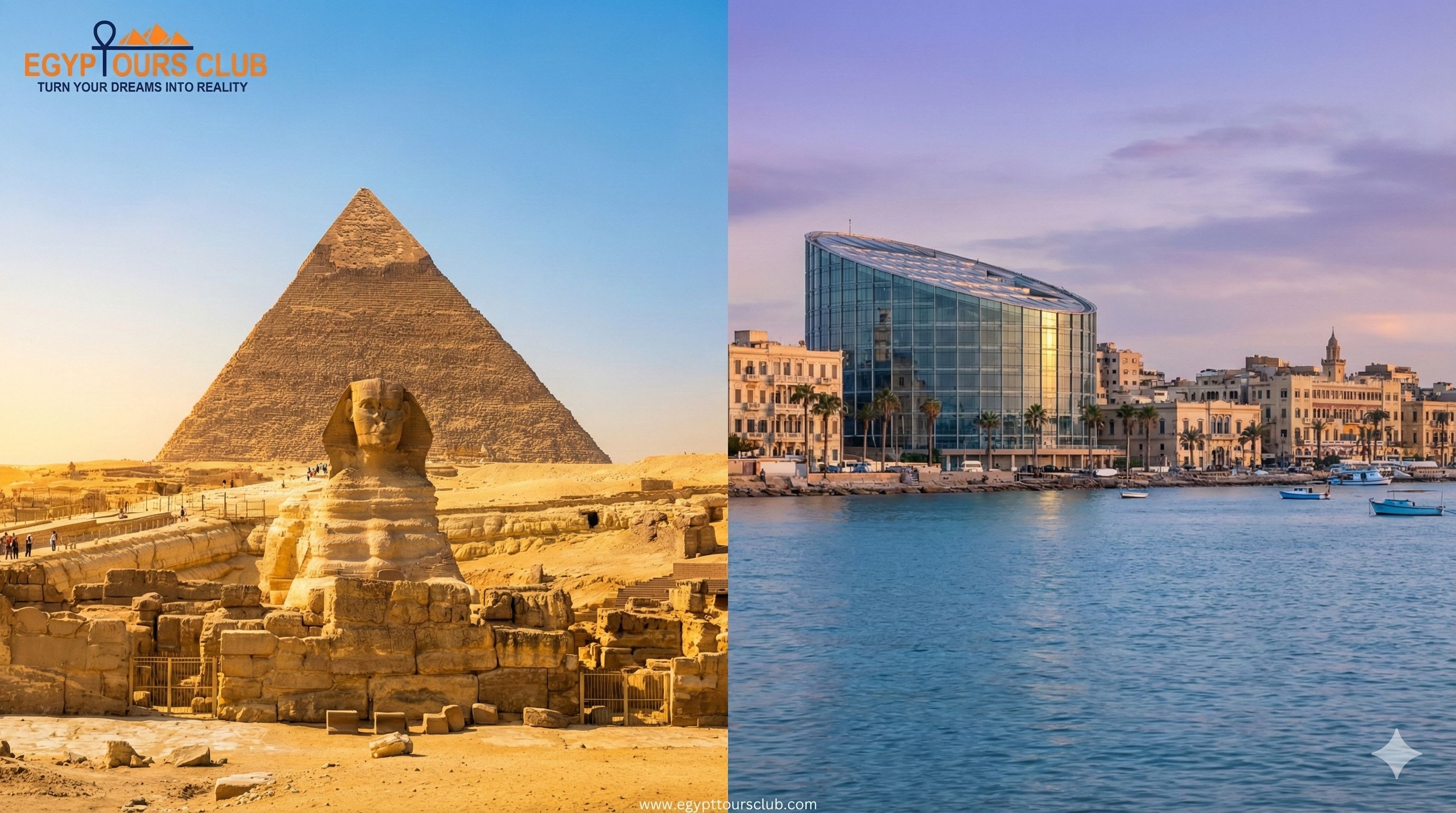


Great Sphinx of Giza | History, Visitor Guide & Travel Tips

The Sphinx

Egypt Tours Club

Giza Plateau · Khafre Context · Valley Temple · Visitor Planning

Great Sphinx of Giza · History · Visitor Guide

Great Sphinx of Giza Visitor Guide

Standing beside the Pyramids of Giza, the Great Sphinx is one of ancient Egypt's most recognizable monuments. Use this guide to understand its history and symbolism, find the best viewpoints, plan your visit, and combine the Sphinx with the rest of the Giza Plateau.

LocationGiza Plateau
PeriodOld Kingdom context
Associated rulerCommonly linked to Khafre
MaterialLimestone
Best pairingPyramids + Valley Temple + GEM
UNESCO contextMemphis and its Necropolis

AEO Quick Answer

What is the Great Sphinx of Giza?

The Great Sphinx of Giza is a monumental limestone statue with a lion's body and a human head on the Giza Plateau. It is generally associated with the Old Kingdom and is commonly linked to Pharaoh Khafre, although aspects of its exact date and purpose remain debated by scholars.
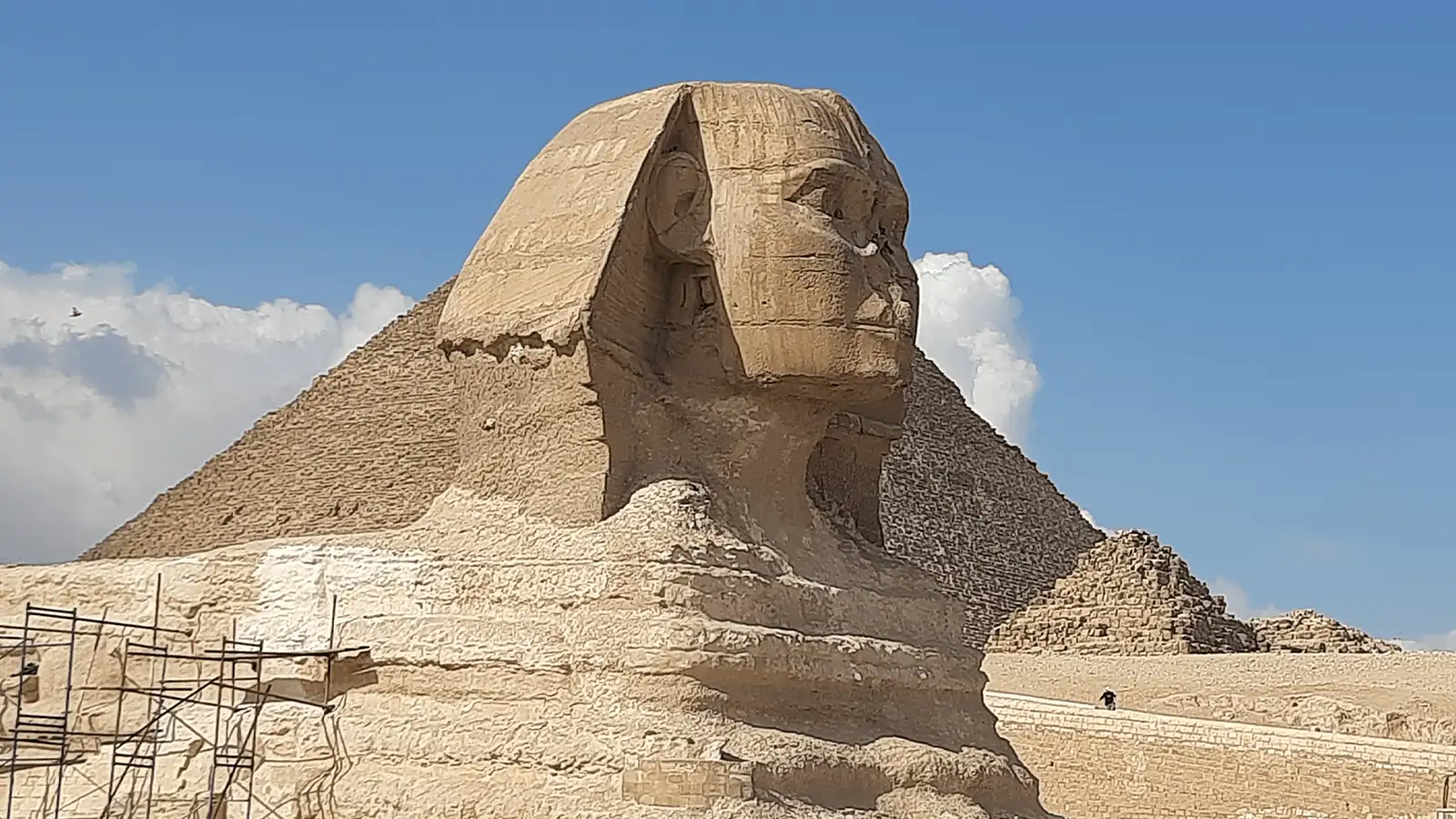
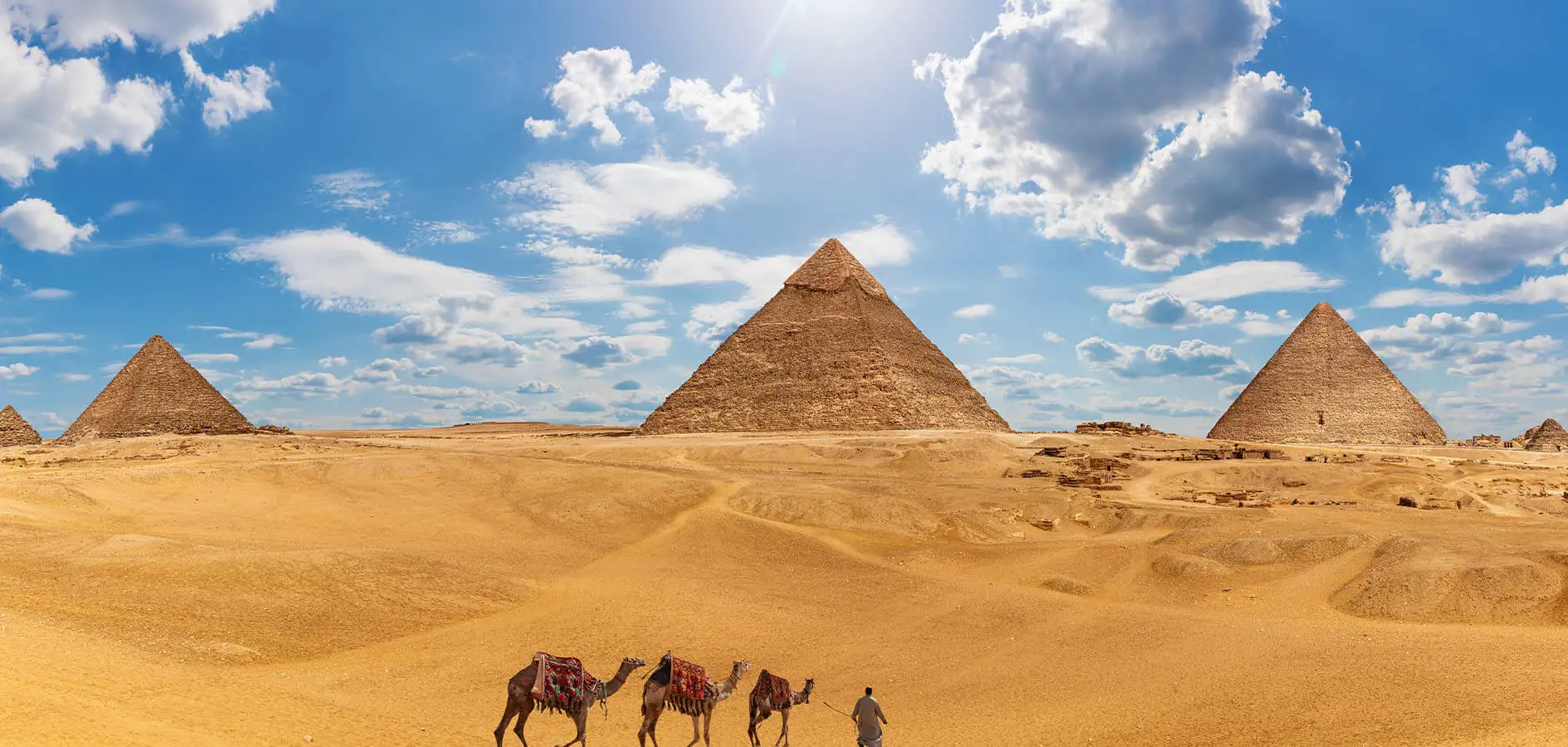
Why the Great Sphinx Matters

A monument that connects royal image, landscape and later memory

The Sphinx is significant because it belongs to the architectural and symbolic landscape of Giza, not because of sensational mystery claims. Its placement near Khafre's complex, its carved limestone form and its long history of reuse and restoration make it one of the key monuments for understanding the plateau.

Royal and Landscape Context

The lion body and human royal head create a powerful royal image. The monument's position beside Khafre's Valley Temple and causeway is central to the mainstream archaeological association with Khafre.

Later Egyptian Importance

The Sphinx continued to matter long after the Old Kingdom. New Kingdom activity around the monument, including the Dream Stela of Thutmose IV, shows how later Egyptians reinterpreted and restored the ancient statue.

History of the Great Sphinx

Old Kingdom setting, later restorations and the Dream Stela

The Sphinx is generally placed in an Old Kingdom setting and commonly associated with Khafre's Fourth Dynasty complex. Its exact authorship and some aspects of its original purpose remain debated, so the strongest approach is to separate archaeological context from later interpretation.

Old Kingdom

Commonly Associated with Khafre

The monument's location beside Khafre's Valley Temple, causeway and pyramid complex is a major reason most scholars connect it with his reign.

Later History

Burial, Exposure and Restoration

Sand repeatedly accumulated around the monument, and different periods saw clearance and repair. Weathering and restoration are therefore part of the Sphinx's long physical history.

New Kingdom

Thutmose IV and the Dream Stela

The stela between the paws records a royal story in which the Sphinx promises kingship to the young Thutmose IV if he clears the monument from sand.

Who Built the Sphinx?

Khafre is the mainstream association, but certainty should not be overstated

Most archaeological interpretation connects the Great Sphinx with Khafre because of its physical relationship with his Valley Temple and pyramid complex. However, the statue itself does not preserve a surviving original inscription that directly names its builder, so responsible writing should acknowledge that scholarly discussion remains.

Design, Scale & Symbolism

Lion body, royal head and an east-facing limestone monument

The Great Sphinx was carved from the limestone bedrock of the plateau. Its composite form combines a reclining lion with a human royal head, an image commonly read in relation to kingship, power and protection. Later Egyptian traditions also connected the monument with solar and horizon symbolism.

Lion Body

The lion form communicates strength and royal authority in a visual language familiar across ancient Egyptian sphinx imagery.

Royal Head

The human head presents a royal identity, although the exact portrait identification should not be treated as absolutely certain.

Limestone Bedrock

The monument was cut from the natural geology of Giza, and varying limestone layers have weathered differently over time.

Orientation

The monument faces east, a feature that later fitted naturally with solar and horizon associations in Egyptian religious interpretation.

The Missing Nose

What is known — and what should not be repeated as fact

The exact circumstances behind the loss of the Sphinx's nose are not securely established. The popular claim that Napoleon's soldiers destroyed it with cannon fire is not supported by the historical record, because the monument was depicted without its nose before Napoleon's campaign in Egypt.

The Dream Stela

Why Thutmose IV matters to the later history of the Sphinx

The Dream Stela stands between the Sphinx's front paws and dates to the New Kingdom. Its inscription tells a royal story linking the young Thutmose IV, the sand-covered monument and his later kingship, showing how the ancient Sphinx was reinterpreted and restored long after the Old Kingdom.

Sphinx Temple & Valley Temple

See the monument as part of a ceremonial complex

The Sphinx precinct includes architectural context that makes the visit more meaningful. The nearby Sphinx Temple and Khafre's Valley Temple help explain how the monument relates spatially to the larger royal landscape.

Sphinx Temple

The temple beside the monument reinforces that the Sphinx belonged to an organized ceremonial setting rather than standing as an isolated sculpture.

Best Views of the Sphinx

Use different angles to understand the monument and its setting

Front, side and wider pyramid-context views reveal different aspects of the Sphinx. Move through the approved visitor areas rather than relying on one famous frame.

Front view of the Great Sphinx of GizaFront View

Front View

Use the frontal perspective for the monument's face, paws and central symmetry, with the Dream Stela area forming part of the historical context.

Side Profile

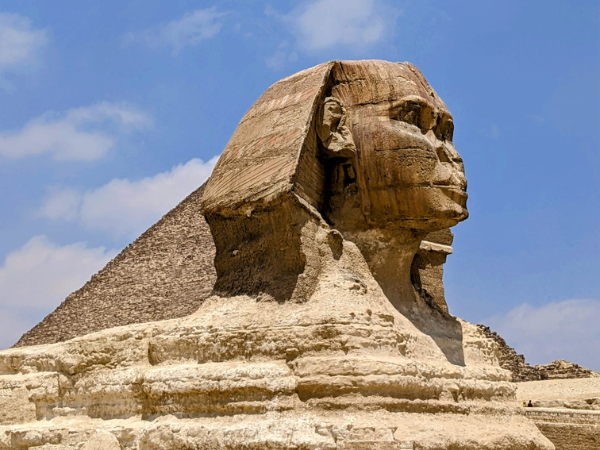
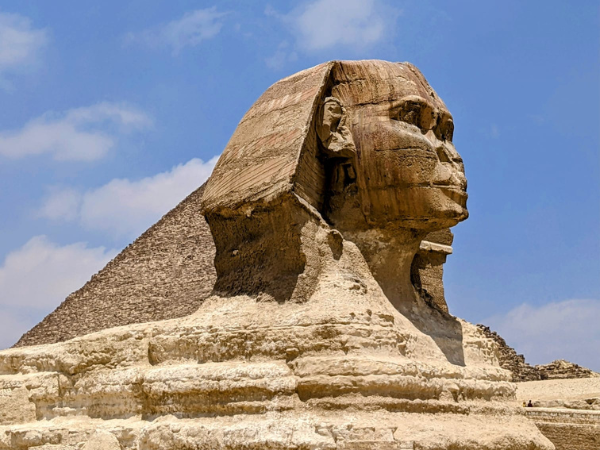
Side Profile

The side profile makes the lion body easier to read and shows how the statue extends from the limestone of the plateau.

Great Sphinx with the Giza pyramids in the wider plateau landscapePyramid Context

Sphinx with Khafre & Giza Context

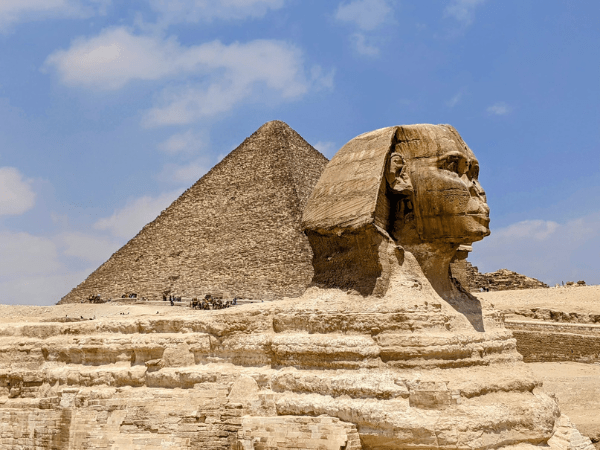
Wider views connect the Sphinx to the pyramid landscape and make its archaeological relationship with Khafre's complex easier to understand.

How to Visit the Sphinx

Plan the Sphinx as part of the Giza Plateau, not as a separate stop

A practical route normally places the Sphinx after the main pyramid areas and panoramic context, then moves through the Sphinx and Valley Temple zone. Walking, heat, crowd flow and vehicle access all affect the real pace of the visit.

Step 1

Start with the Pyramids

Build the wider Fourth Dynasty context first so the Sphinx makes more archaeological sense when you reach the lower part of the plateau.

Open the Pyramids of Giza Guide
Step 2

Use the Panorama

Take in the three principal pyramids as one landscape before moving to the lower Sphinx area.

Step 3

Finish at Sphinx + Valley Temple

Use the monument, its side profile, paws, temple context and Khafre relationship as the final interpretive block of a classic Giza visit.

How long to spend: about 45–90 minutes is a practical range for the Sphinx area for many visitors, while a complete Giza Plateau visit needs substantially more time. Add extra time when combining Giza with the Grand Egyptian Museum or a slower family or mobility-sensitive route.

Combine With Nearby Attractions

Build a logical Giza and pyramid-history route

Keep the Great Sphinx page focused on the monument, then use dedicated pages and tour products for the wider Pyramids of Giza, museum and pyramid-evolution topics.

Parent Context

Pyramids of Giza

Use the dedicated Giza guide for Khufu, Khafre, Menkaure and the complete plateau route.

Explore the Giza Plateau
Same-Day Pairing

Grand Egyptian Museum

Combine outdoor archaeology with museum objects and interpretation when you have enough time for a full day.

Open the GEM Guide

Photography Tips

Photograph the Sphinx without losing the archaeological context

Morning / Later Light

Earlier or later light can improve comfort and create stronger form, while exact access times remain subject to current site operations.

Front View

Use the paws and face for the monument's strongest frontal composition.

Side Profile

Move to a permitted side viewpoint to show the lion body and length of the carved bedrock form.

Pyramid Context

Use a wider angle that places the Sphinx against Khafre or the wider plateau when visitor flow allows it.

Photography rule: follow current on-site guidance for tripods, professional equipment and restricted areas. Do not assume drone use is permitted.

Family & Accessibility

Keep the visit comfortable for children, seniors and slower travel paces

Visiting with Children

  • Keep the Sphinx portion concise after the larger pyramid route.
  • Use water, shade and regular rest breaks.
  • Avoid overloading the hottest part of the day with continuous walking.
  • Explain the Sphinx through simple ideas such as lion strength, kingship and the pyramid landscape.

Accessibility Notes

  • Expect uneven surfaces in parts of the plateau.
  • Distances between major areas can be meaningful.
  • Heat exposure can affect walking comfort.
  • Ease of access varies by viewpoint and current routing; avoid assuming universal wheelchair access.

Before You Visit

Simple preparation improves a Giza visit

Comfortable Shoes

Choose footwear suitable for uneven ground and exposed archaeological areas.

Water & Sun Protection

Carry water and use practical sun protection, especially in warmer periods.

Start Early

An earlier start can improve comfort and leave more flexibility for a same-day museum or archaeology pairing.

Check Official Policies

Review current ticket, entrance and photography information before travel because operating rules can change.

Local Expert Advice

Use route logic, not a checklist

The strongest visit is usually Giza first, Sphinx and Valley Temple in context, then the Grand Egyptian Museum or another nearby archaeological goal if time allows. Build buffer time for Greater Cairo traffic, do not force too many distant sites into one half day, and confirm current access rules before arrival.

Great Sphinx of Giza with pyramid backdrop

Official & Authority Context

Check current visitor information and archaeological context

Use official sources close to the visit date for operational information that may change. Historical interpretation should distinguish established archaeological context from debated attribution.

Company and Operator

Who is behind Egypt Tours Club?

Egypt Tours Club is the traveler-facing brand operated by Vagus Travel Co.

Egypt Tours Club

Destination information, private tours, day trips, multi-day packages and tailor-made trip planning for Egypt travelers.

Frequently Asked Questions

Great Sphinx of Giza visitor questions

Direct answers on history, authorship, visitor planning, photography, access and nearby combinations.

What is the Great Sphinx of Giza?

The Great Sphinx of Giza is a monumental limestone statue with a lion's body and a human head on the Giza Plateau. It is generally associated with the Old Kingdom and commonly linked to Khafre, although aspects of its exact date and purpose remain debated by scholars.
Who built the Great Sphinx?

Most scholars connect the monument with Khafre's Fourth Dynasty complex, but no surviving original inscription on the statue names its builder directly, so the attribution should be presented as the mainstream archaeological association rather than absolute certainty.

How old is the Great Sphinx?

If the commonly accepted Fourth Dynasty association is followed, the Sphinx is roughly 4,500 years old. Its exact date remains part of scholarly discussion.

Why does the Sphinx have a lion's body?

The lion body is commonly understood as an image of royal power and strength combined with a human royal head. Later Egyptian traditions also connected the monument with solar and horizon symbolism.

What happened to the Sphinx's nose?

The exact circumstances are not securely known. What is clear is that the nose was already missing before Napoleon's campaign, so the popular Napoleon-cannon story should not be repeated as fact.

Can you go inside the Great Sphinx?

A normal visitor experience focuses on exterior viewing of the monument and its surrounding archaeological context. Any special access rules can change and should be checked through current official information before visiting.

How long should I spend at the Sphinx?

About 45 to 90 minutes is a practical planning range for many visitors when including the main viewpoints and Valley Temple context. Allow more time when the Sphinx is part of a slower Giza Plateau visit.

Is the Sphinx included with a Pyramids of Giza visit?

The Great Sphinx is part of the wider Giza Plateau archaeological landscape and is commonly combined with the three main pyramids in one visit. Ticket and access arrangements should be checked for the current date.

What is the best time of day to see the Sphinx?

Earlier or later light can be useful for photography and comfort, especially in warmer periods. Exact access times and visitor flow can change, so confirm current site information before planning around a specific hour.

Can I photograph the Great Sphinx?

Photography is an important part of the visitor experience, but equipment and professional-photography rules can change. Follow current on-site guidance and do not assume drones or specialist equipment are permitted.

Is the Great Sphinx close to the pyramids?

Yes. The Sphinx stands within the Giza Plateau landscape, close to Khafre's Valley Temple and below the pyramid complexes, making it a natural part of the same route.

What is the Dream Stela?

The Dream Stela is the New Kingdom inscription of Thutmose IV placed between the Sphinx's paws. It records a royal story linking the young prince, the sand-covered monument and his later kingship.

What is the Sphinx Temple?

The Sphinx Temple is the temple immediately associated with the Sphinx precinct. It helps visitors understand that the monument belonged to a larger ceremonial landscape rather than standing in isolation.

What is the Valley Temple?

The Valley Temple beside the Sphinx is part of Khafre's pyramid complex and is one of the strongest physical reasons scholars connect the Sphinx with Khafre's royal landscape.

Can I visit the Sphinx and Grand Egyptian Museum in one day?

Yes. The Grand Egyptian Museum and Giza Plateau are a logical same-day combination when enough time is reserved for both rather than rushing the monuments or museum.

Is the Sphinx suitable for children?

Yes, with realistic pacing. Use water and shade breaks, avoid unnecessary midday heat and keep the explanation of history age-appropriate.

Is the Sphinx area accessible for travelers with limited mobility?

Accessibility varies by viewing area and route. Expect uneven ground, exposed distances and changing access conditions, and consider vehicle support where the confirmed route allows it.

Do I need a guide to visit the Sphinx?

A guide is not mandatory for every traveler, but a licensed Egyptologist can make the relationship between the Sphinx, Khafre, the Valley Temple and the wider plateau much easier to understand.

What should I wear when visiting the Sphinx?

Wear comfortable walking shoes and practical clothing suited to the weather. Sun protection and water are useful because the Giza Plateau is largely exposed.

How do I get to the Great Sphinx from Cairo?

The Sphinx is on the Giza Plateau within Greater Cairo travel planning. Road time varies with hotel location and traffic, so allow a buffer rather than relying on one fixed transfer time.

Can I combine the Sphinx with Saqqara and Dahshur?

Yes, if your priority is pyramid history and you have a full day. The route is more demanding than a focused Giza visit, so road time and walking pace should be planned carefully.

Are ticket rules and opening times fixed?

No. Ticket categories, active entrances, opening conditions and photography policies can change. Check the latest official information close to your visit date.

Private Giza Planning

Plan Your Great Sphinx and Giza Visit

Choose a focused Giza day tour, combine the Sphinx with the Pyramids and Grand Egyptian Museum, or ask our local team to build the plateau into a longer Egypt itinerary.

Related Tours

10% Day Tour
8 Hours 5
Saqqara, Dahshur & Giza Pyramids Day Tour from Cairo

Trace the evolution of pyramid construction on a private 8-hour Cairo day tour to Dahshur, Saqqara and the Giza Pyramids with an Egyptologist guide, entrance fees and private transportation.

Giza Pyramids Half-Day Tour with Sphinx & Valley Temple
Half Day Tour
3 Hours 5
Giza Pyramids Half-Day Tour with Sphinx & Valley Temple

Explore the Giza Plateau on a private 3-hour half-day tour covering the Great Pyramid, panoramic viewpoint, Great Sphinx and Valley Temple with an Egyptologist guide.

Luxury Egypt Tour Packages
11 days / 10 nights
11-Day Egypt Tour: Giza Pyramids, Nile Temples & Red Sea Relaxation

Experience an 11-day luxury Egypt tour combining the Giza Pyramids and GEM with a five-star Nile cruise from Aswan to Luxor and four relaxing nights in Hurghada.

4 Days Cairo and Alexandria tour package
Egypt Classic Tour Packages
4 days / 3 nights
4 Days Cairo and Alexandria tour package

Discover Cairo and Alexandria in 4 days with a private Egypt tour combining the Giza Pyramids, Old Cairo, NMEC and Alexandria’s Greco-Roman landmarks. Enjoy expert guiding, private transfers, selected lunches and 5-star hotel accommodation in Cairo.

12 Day Egypt Tour Package with Nile Cruise & Hurghada | Cairo, Alexandria, Luxor & Red Sea
15% Egypt Classic Tour Packages
12 days / 11 nights
12 Day Egypt Tour Package with Nile Cruise & Hurghada | Cairo, Alexandria, Luxor & Red Sea

Discover Egypt in 12 days with guided tours of Cairo, Giza and Alexandria, a 3-night Nile Cruise from Aswan to Luxor, and relaxing Red Sea days in Hurghada. The journey includes major ancient sites, domestic travel and flexible leisure time.