

El Ashmunein, Egypt | Hermopolis Magna Guide

El Ashmunein (Hermopolis Magna), Egypt

Egypt Tours ClubMinya · Hermopolis Magna · Thoth · Middle Egypt
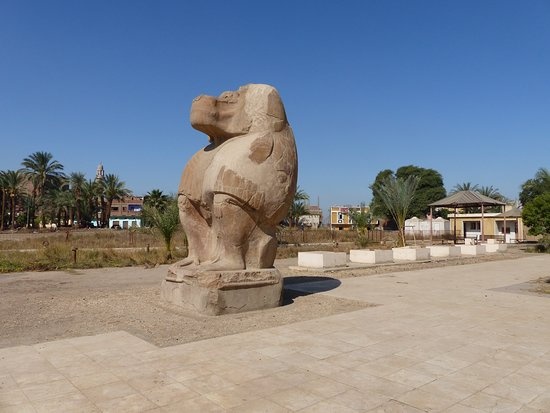
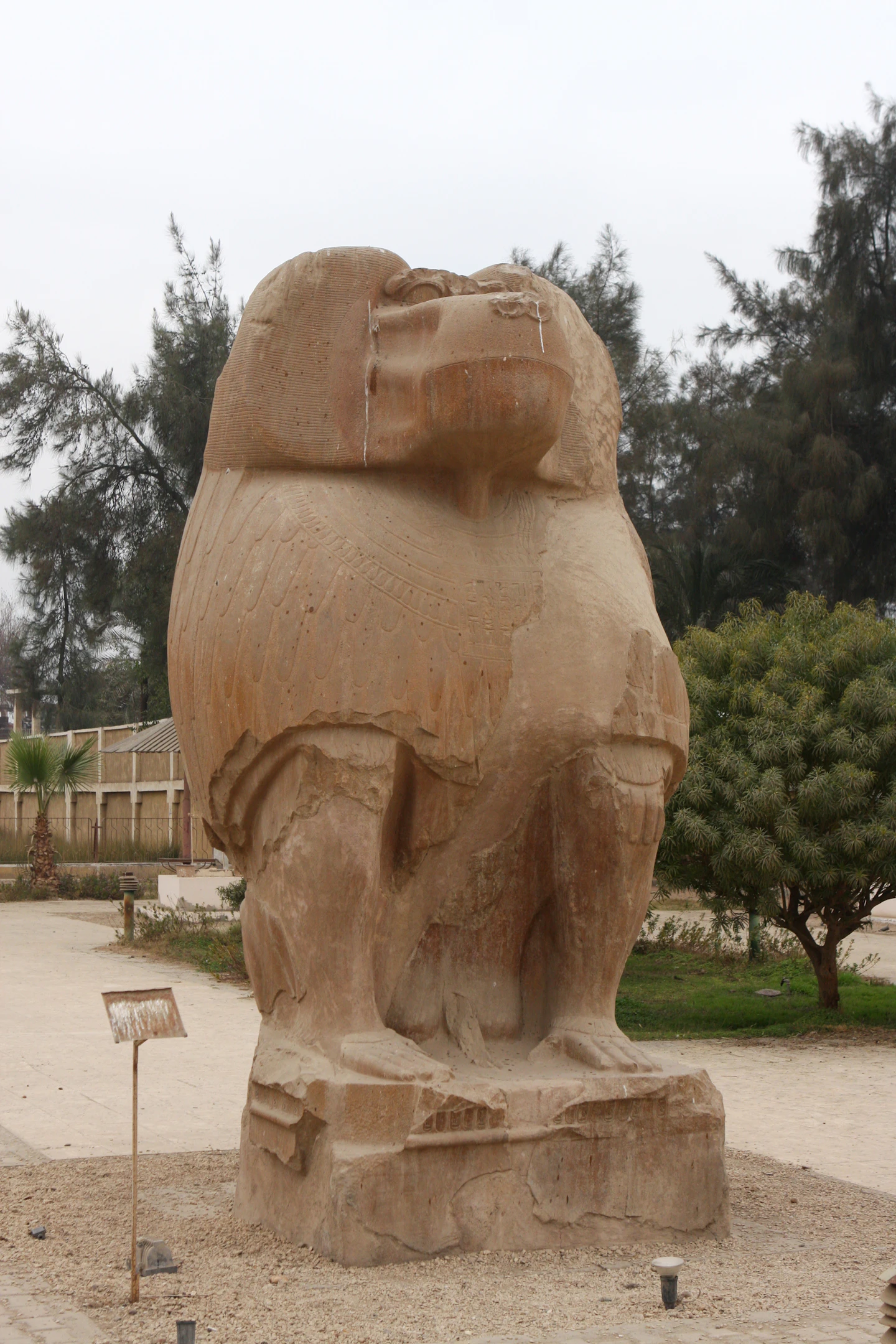
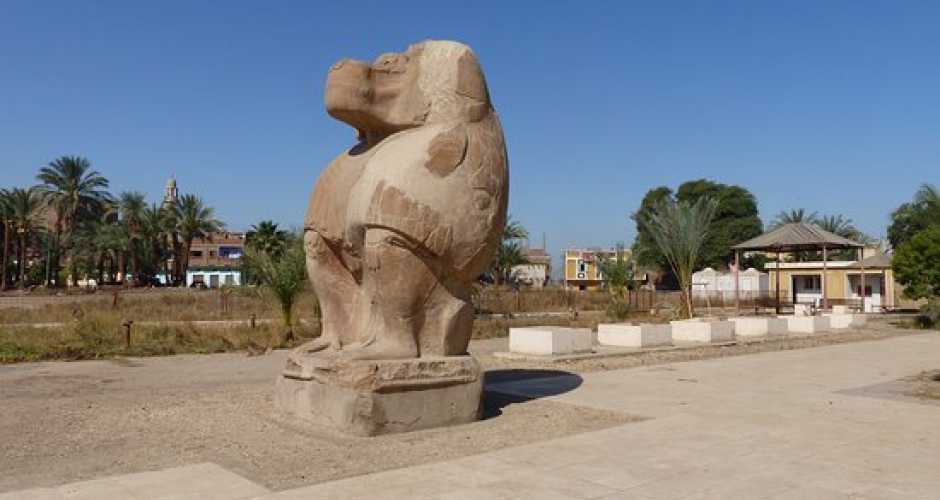
Colossal baboon monument at El Ashmunein, ancient Hermopolis Magna
Hermopolis Magna · Khmun · City of Thoth

El Ashmunein (Hermopolis Magna) Visitor Guide

Explore ancient Khmun, one of Egypt's great cult centers of Thoth. See monumental baboon sculpture, temple remains, Greco-Roman city layers and an early Christian basilica, then connect Hermopolis with Tuna El-Gebel and the wider Minya archaeological landscape.

Quick Travel Answer

What is El Ashmunein?

El Ashmunein is the archaeological site of ancient Khmun, later called Hermopolis Magna. It was one of Egypt's principal cult centers of Thoth and preserves remains from Pharaonic, Greco-Roman and Christian periods.

The site is best understood as an ancient city with several historical layers, not as a single temple. That is why the Thoth monuments, temple remains and basilica should be read together—and why Tuna El-Gebel, the necropolis of Hermopolis, is its strongest companion visit.

Temple remains at El Ashmunein, ancient Hermopolis Magna

History & Meaning

Khmun, Hermopolis Magna and the City of Thoth

Ancient El Ashmunein was known as Khmun, a name traditionally associated with the local Ogdoad, the group of eight primordial deities central to Hermopolitan creation theology.

The city became one of Egypt's most important cult centers of Thoth, the deity associated with wisdom, writing, calculation and the moon. In the Greco-Roman period, the identification of Thoth with Hermes helped produce the name Hermopolis Magna.

The archaeological landscape also preserves a later Christian layer. The surviving basilica shows that Hermopolis remained a significant urban and religious center into Late Antiquity.

Read the Hermopolis Magna overview

Archaeological Highlights

What to see at El Ashmunein

The strongest visit moves from Thoth's monumental imagery and temple landscape to the later city and Christian basilica, then connects the site with Tuna El-Gebel.

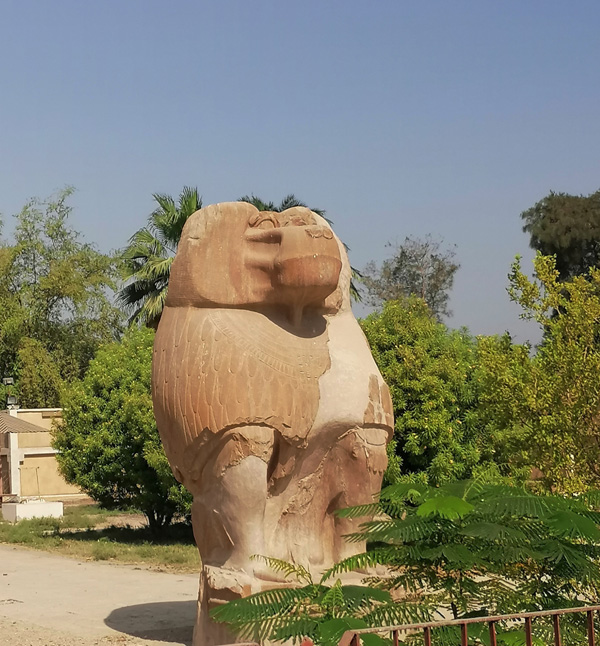
Colossal baboon statue associated with Thoth at El Ashmunein
Sacred IconThoth

Colossal Baboon Statues

Monumental seated baboons are the site's most memorable symbols. The baboon was one of Thoth's principal animal forms and expresses the religious identity of ancient Hermopolis.

Check the Minya attraction profile
Open-air archaeological display at El Ashmunein
Open-Air SiteMulti-Period

Open-Air Archaeological Display

Architectural fragments, inscriptions and sculpture gathered across the ancient city provide a compact view of Hermopolis Magna's long development.

Review local visitor information
Standing columns of the early Christian basilica at El Ashmunein
Late AntiquityChristian Heritage

Early Christian Basilica

The surviving Corinthian colonnade is one of the clearest signs that Hermopolis remained important after the Pharaonic and Greco-Roman periods.

Explore the Christian-period context
Temple blocks and ruins at ancient Hermopolis Magna
Temple PrecinctRoyal Building

Temple of Thoth & Royal Remains

The great sanctuary no longer stands complete, but temple blocks, columns and inscriptions preserve the scale and importance of the ancient sacred precinct.

Connect with Tell El-Amarna
Baboon form of Thoth associated with El Ashmunein
Creation TheologyOgdoad

Khmun and the Ogdoad

The ancient name Khmun is closely connected with the local creation tradition of eight primordial deities. This theology gives the city a distinctive place in Egyptian religious history.

Read about Thoth
Nearby NecropolisPetosiris

Tuna El-Gebel

The necropolis of Hermopolis preserves the Tomb of Petosiris, sacred animal catacombs and a wider Thoth-related funerary landscape, making it the essential companion site.

Open the Tuna El-Gebel guide

What to Prioritize

If your time is limited, focus on these four things

01

Thoth's Monumental Imagery

Use the baboon statues to establish the site's religious identity before reading the rest of the ruins.

02

Temple Landscape

Look at blocks and architectural remains as evidence of a large sanctuary rather than expecting a complete standing temple.

03

Christian Basilica

Do not skip the later layer; it explains how Hermopolis remained important long after the Pharaonic period.

04

Tuna El-Gebel Context

Pair the living city with its necropolis whenever your itinerary allows.

Suggested Visit Route

A logical route through El Ashmunein

The exact accessible path can change, but this interpretation sequence keeps the history clear even when the physical route differs.

Start with Thoth

Begin with the monumental baboon imagery and establish why Hermopolis was a major cult center.

Read the Temple Remains

Move through surviving blocks, inscriptions and architectural fragments from the sacred precinct.

Add the Later City

Use the Greco-Roman material and basilica to understand the city's long afterlife.

Continue to Tuna El-Gebel

Complete the Hermopolis story with its desert necropolis, tombs and sacred animal catacombs.

Tickets & Access Guidance

Use current sources for operational details

Ticket categories, opening times, photography rules and accessible archaeological areas can change. Avoid planning around old screenshots or archived prices.

Planning questionDurable guidanceWhat to verify close to travel
Site entryPlan El Ashmunein as a protected archaeological attraction in Minya.Current ticket arrangements, payment method and last entry.
Accessible areasNot every excavation or ruin is necessarily part of the visitor path.Which zones are open on your exact date.
PhotographyRespect signs, staff directions and active archaeological work.Camera, phone, tripod or equipment-specific restrictions.
Regional routePrivate transport is the simplest way to link dispersed Minya sites.Road timing, local procedures and confirmed itinerary sequence.

Practical Visitor Planning

What to know before you go

01

Best Time

Cooler months are generally more comfortable. In warmer weather, start early and reduce midday exposure.

02

Visit Duration

About 1.5–2 hours works for many focused visits, depending on access and interpretation depth.

03

Photography

Morning and late-afternoon light can be kinder to stone; always follow the current site rules.

04

What to Bring

Water, sun protection, a hat and comfortable closed shoes for uneven archaeological ground.

05

Families

The baboon statues and Thoth story can engage older children; keep the total archaeology day realistic.

06

Accessibility

Ground may be uneven and routes can change. Confirm assistance needs before departure.

07

Guide or Self-Guided?

An Egyptologist adds major value because much of the site requires historical interpretation rather than simple monument recognition.

08

Heat & Shade

Expect exposed areas and limited shade. Pace walking and carry enough water.

09

Regional Base

Minya is the main regional base; Mallawi can reduce road time to southern sites.

Local expert advice: ask your guide to explain the relationship between Khmun, Thoth, the Ogdoad, the temple precinct, the Christian basilica and Tuna El-Gebel. That connected story is more valuable than treating each ruin as a separate photo stop.

Nearby Combinations

Build the right Middle Egypt route

Use El Ashmunein for Hermopolis and Thoth, then move to a dedicated page when the travel question changes.

Trusted References

Official and specialist sources

Use these references for regional and historical context, then confirm volatile operating details close to your visit.

Minya Tourism

Regional attraction and visitor context for El Ashmunein.

Open Minya Tourism

Ministry of Tourism & Antiquities

National authority for Egypt's archaeological heritage and visitor updates.

Open Ministry website

Egypt Ministry of Tourism & Antiquities

Official national tourism and antiquities authority for current public information and visitor services.

Open the Ministry website

Holy Family in Egypt

Christian-period context for Al-Ashmunayn and its basilica remains.

Open Christian heritage context

Frequently Asked Questions

El Ashmunein questions before you go

Attraction-specific answers covering history, timing, route planning, access, families, photography and nearby combinations.

What is El Ashmunein?

El Ashmunein is the archaeological site of ancient Khmun, later called Hermopolis Magna. It was one of Egypt's principal cult centers of Thoth and preserves remains from Pharaonic, Greco-Roman and Christian periods.

Where is El Ashmunein?

El Ashmunein lies in Minya Governorate near Mallawi in Middle Egypt, about 45 kilometres south of Minya city.

Why is Hermopolis Magna important?

Hermopolis Magna was a major religious and regional center associated with Thoth and the local Ogdoad creation tradition. Its remains also show the city's importance through Greek, Roman and Christian periods.

Why was Hermopolis associated with Thoth?

Khmun was one of the principal cult centers of Thoth, the Egyptian deity associated with wisdom, writing, calculation and the moon. Greek identification of Thoth with Hermes helped produce the name Hermopolis.

What does the ancient name Khmun mean?

Khmun is traditionally linked with the local Ogdoad, a group of eight primordial deities central to Hermopolitan creation theology.

What are the main highlights at El Ashmunein?

The principal highlights are the monumental baboon statues associated with Thoth, remains of the temple precinct, the open-air archaeological display and the standing columns of the early Christian basilica.

Why are there giant baboon statues at Ashmunein?

The baboon was one of Thoth's important animal forms. Monumental baboon statues therefore expressed the god's presence and the religious identity of ancient Hermopolis.

What can I see of the Temple of Thoth?

The great sanctuary does not survive as a complete standing temple. Visitors instead encounter architectural blocks, columns, inscriptions and other material from the ancient temple landscape.

Why is the Christian basilica important?

The basilica demonstrates that Hermopolis remained an important urban and religious center into Late Antiquity. Its surviving colonnade adds a distinctive Christian layer to the archaeological site.

How much time should I allow for El Ashmunein?

A focused visit of around one and a half to two hours is suitable for many travelers, depending on current access, pace and how deeply you want to interpret the ruins.

What should I prioritize if I have limited time?

Prioritize the Thoth-related monumental sculpture, temple remains and the early Christian basilica. If possible, combine the site with Tuna El-Gebel to understand the wider Hermopolis landscape.

Can El Ashmunein and Tuna El-Gebel be visited together?

Yes. Tuna El-Gebel was the necropolis of Hermopolis Magna, making it the most natural archaeological companion to El Ashmunein.

What is the connection between El Ashmunein and Tuna El-Gebel?

El Ashmunein was the living religious city of Hermopolis Magna, while Tuna El-Gebel served as its necropolis and preserves tombs, sacred-animal catacombs and Thoth-related funerary material.

What is the connection between El Ashmunein and Tell El-Amarna?

Ashmunein preserves reused material connected with the Amarna period, while nearby Tell El-Amarna was Akhenaten's capital Akhetaten. The two sites illuminate different religious landscapes in Middle Egypt.

Can I combine El Ashmunein with Beni Hassan?

Yes, but Beni Hassan is a separate archaeological cluster and adds road time. It usually works better within a multi-day Minya itinerary than an overloaded single day.

How do I reach El Ashmunein from Cairo?

Most visitors either travel overland by private vehicle or reach Minya or Mallawi by rail and continue with prearranged road transport. A Minya-based itinerary is more comfortable when several sites are planned.

When is the best time to visit El Ashmunein?

Cooler months are generally more comfortable for exposed archaeological sites in Middle Egypt. In warmer weather, start early and limit time in the strongest midday heat.

What should I bring?

Bring water, sun protection, a hat and comfortable closed shoes suitable for uneven archaeological ground. Carry any personal medication you may need during long regional transfers.

Is El Ashmunein suitable for children?

Older children may enjoy the giant baboon imagery, the story of Thoth and the feeling of exploring a multi-period ancient city. Keep heat and total archaeology time realistic.

Is El Ashmunein accessible for travelers with limited mobility?

Accessibility can be difficult because open archaeological ground may be uneven and the visitor route can change. Confirm current conditions and assistance needs before travel.

Can I take photographs at El Ashmunein?

Photography rules can vary by area and equipment type. Follow current signage and staff instructions and avoid restricted excavation zones.

Do I need a guide at El Ashmunein?

A qualified Egyptologist is especially useful because the site's importance depends on connecting Thoth, the Ogdoad, Hermopolis Magna, the Christian basilica and nearby Tuna El-Gebel.

Plan Your Visit to El Ashmunein

Build a realistic Minya archaeology route

Explore the destination guide first, compare current Minya day tours when you are ready, or request a tailor-made route that combines El Ashmunein with Tuna El-Gebel, Tell El-Amarna or Beni Hassan at a realistic pace.