Bab Zuweila, Cairo | Historic Gate Travel Guide

Bab Zuweila, Cairo

Egypt Tours ClubHistoric Cairo · Fatimid gate · Al-Muizz route
Bab Zuweila
Fatimid Gate · Historic Cairo

Bab Zuweila Visitor Guide

Explore Cairo’s monumental southern Fatimid gate through its twin stone towers, later Mamluk minarets, rooftop views, Sultan Al-Mu’ayyad Mosque and the living craft streets immediately beyond the gate.

Quick Travel Answer

What is Bab Zuweila?

Bab Zuweila, also written Bab Zuwayla, is the surviving southern gate of Fatimid Cairo. The official monument record dates it to 1092 CE under the vizier Badr al-Jamali during the reign of Caliph al-Mustansir.

The gate is more than a defensive monument. Its towers became the bases for the twin minarets of Sultan Al-Mu’ayyad Shaykh’s mosque in the 15th century, linking Fatimid military architecture with a later Mamluk religious complex and a living market district.

Bab Zuweila

History & Meaning

From Fatimid city gate to Mamluk skyline landmark

Bab Zuweila was constructed in 485 AH/1092 CE as part of the fortified southern approach to Fatimid Cairo. Its two semicircular towers and deep passage controlled movement into the city from the south.

Roughly three centuries later, Sultan Al-Mu’ayyad Shaykh used the gate towers as bases for the two minarets of his mosque, completed in the early 15th century. This created the unusual layered monument visitors see today.

The gate also witnessed major historical events and later conservation. The official record notes restoration work carried out with the Supreme Council of Antiquities and the American Research Center in Egypt between 1998 and 2003.

Open the official monument page

Architecture, Views & Urban Life

What to see at Bab Zuweila

Read the monument from ground level upward: defensive masonry, the gate passage, later minarets, city views and the craft district beyond the southern threshold.

Fatimid Gate Towers
Military Landmark

Fatimid Gate Towers

Two semicircular stone towers flank the entrance and preserve the massive scale of Cairo’s Fatimid fortifications.

Open the official monument profile
Twin Mamluk Minarets
Skyline Landmark

Twin Mamluk Minarets

The minarets of Sultan Al-Mu’ayyad’s mosque rise from the Fatimid gate towers, creating one of Historic Cairo’s most distinctive vertical compositions.

Place the monument in UNESCO context
Gate Passage & Doors
Historic Fabric

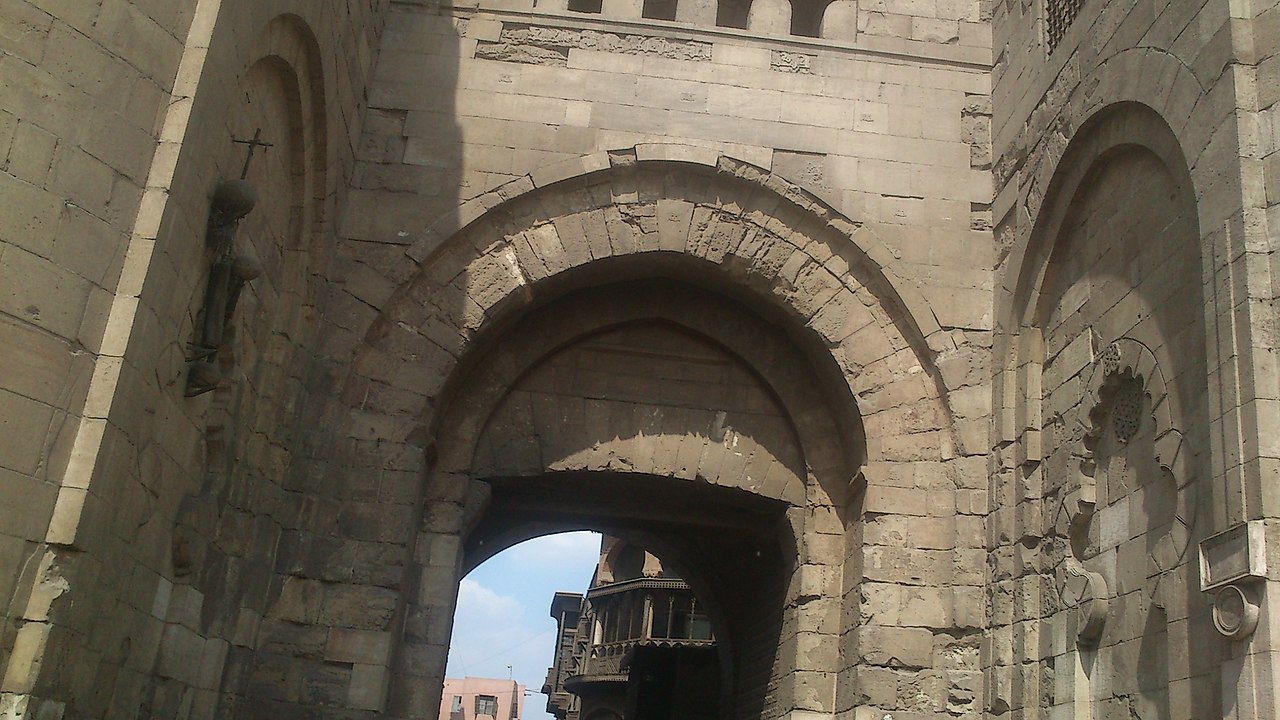
Gate Passage & Doors

Walk through the deep gate passage and study the relationship between defensive stonework, urban circulation and the monumental entrance.

Review the official history
Historic Cairo View
Panoramic Experience

Historic Cairo View

When upper access is open, the climb can reveal domes, minarets, rooftops and the dense urban fabric of Historic Cairo.

See the verified image archive
Sultan Al-Mu’ayyad Context
Mamluk Layer

Sultan Al-Mu’ayyad Context

The adjoining mosque transforms the visit from a single Fatimid gate into a layered story of military and religious architecture.

Connect with Al-Muizz Street
Khayamiya & Craft Streets
Living Heritage

Khayamiya & Craft Streets

South of the gate, the historic craft district continues the experience through textile workshops, market lanes and traditional urban life.

Read the Old Cairo guide

What to Prioritize

If your time is limited, focus on these four things

01

Tower Scale

Stand back first to read the gate as a defensive city entrance, not only a photogenic arch.

02

Layered Architecture

Compare the 11th-century Fatimid towers with the later Mamluk minarets above them.

03

Upper View

If access is open and you are comfortable with stairs, use the climb to understand the surrounding historic city.

04

Khayamiya Continuation

Step beyond the gate into the craft streets so the visit connects monument, market and living urban heritage.

Suggested Visit Route

A logical way to explore Bab Zuweila

Start Outside the Gate

Read the full twin-tower composition and relationship with the adjoining mosque.

Pass Through the Arch

Examine the depth of the gateway, stonework and surviving fabric at street level.

Climb if Access Is Open

Use the tower and minaret route only if current safety and visitor access allow it.

Finish in Khayamiya

Continue south into the traditional craft district or turn north for the longer Al-Muizz walk.

Tickets & Access Guidance

Use current official information for operating details

The official monument page currently publishes hours and ticket categories, but these are operational details and can change. Check the latest official information close to your visit rather than relying on archived prices.

Planning questionDurable guidanceVerify before travel
Site entryPlan Bab Zuweila as a ticketed historic monument within the Al-Muizz heritage route.Current opening hours, ticket categories and last admission.
Tower accessUpper areas involve steep, narrow and uneven stairs and may be restricted at times.Whether roof, tower or minaret access is open on your exact date.
PhotographyUse secure equipment on stairs and follow any staff restrictions inside the monument.Tripod, flash, professional equipment or special-event rules.
Mosque contextThe adjoining Sultan Al-Mu’ayyad Mosque is a religious monument and requires respectful behavior.Prayer-time access, dress expectations and any temporary closures.

Practical Visitor Planning

What to know before you go

01

Best Time

Morning is often more comfortable for stairs and quieter streets; late afternoon can offer attractive light if access remains open.

02

Visit Duration

About 60–90 minutes works for the gate and climb; allow longer when combining the mosque, Khayamiya or a full Al-Muizz walk.

03

Photography

Secure your phone or camera on the stairs and avoid blocking narrow passages while taking photographs.

04

What to Bring

Stable closed shoes, water and light sun protection are practical for a longer Historic Cairo route.

05

Families

Older children may enjoy the gate and views, but steep stairs need close supervision.

06

Accessibility

Ground-level viewing is easier than the upper route; steep historic stairs make the climb unsuitable for some visitors.

07

Guide Value

A guide helps separate Fatimid, Mamluk and later urban layers and explains how the gate fits into Al-Muizz Street.

08

Dress & Etiquette

Modest clothing is practical because the route connects directly with an active Islamic heritage district and adjoining mosque.

09

Walking Route

Treat Bab Zuweila as part of a north–south Historic Cairo walk rather than an isolated taxi stop.

Local expert advice: approach the gate at street level first, then decide whether the climb fits your mobility and current access. Afterward, continue naturally into Khayamiya or north along Al-Muizz instead of retracing the same streets.

Nearby Combinations

Build the right Historic Cairo route

Keep this page focused on Bab Zuweila itself, then move to the page that owns your next planning question.

Trusted References

Official and specialist sources

Use the Egyptian monument authority for Bab Zuweila itself and UNESCO for the wider Historic Cairo context.

Discover Egypt’s Monuments

Official history, construction date, architectural description and current visitor information.

Discover Egypt’s Monuments

UNESCO Historic Cairo

World Heritage context for the historic city and its Fatimid urban fabric.

UNESCO Historic Cairo

Wikimedia Commons

Verified image archive for Bab Zuwayla used for this page’s visual references.

Wikimedia Commons

Frequently Asked Questions

Bab Zuweila questions before you go

Direct answers for history, the climb, timing, photography, mobility and a wider Historic Cairo route.

What is Bab Zuweila?

Bab Zuweila, also written Bab Zuwayla, is the surviving southern gate of Fatimid Cairo, built in 1092 CE under the vizier Badr al-Jamali.

Why is Bab Zuweila important?

It combines Fatimid military architecture, later Mamluk minarets, major historical events and a strategic location at the southern end of Al-Muizz Street.

Who built Bab Zuweila?

The gate was built by the Fatimid vizier Badr al-Jamali during the reign of Caliph al-Mustansir.

When was Bab Zuweila built?

The official monument record dates the gate to 485 AH/1092 CE.

Why are there minarets above the gate?

Sultan Al-Mu’ayyad Shaykh used the Fatimid towers as bases for the two minarets of his adjoining mosque in the early 15th century.

Can visitors climb Bab Zuweila?

Upper access has included tower and minaret routes, but current access can change for conservation, safety or operations. Confirm on the day of your visit.

How difficult is the climb?

The historic stairs can be steep, narrow and uneven. The climb may not suit visitors with mobility limitations, vertigo, heart or respiratory concerns.

How long should I spend at Bab Zuweila?

Around 60–90 minutes is reasonable for the gate and climb, with extra time for the mosque, Khayamiya or a longer Al-Muizz walk.

Where is Bab Zuweila?

It stands at the southern end of Al-Muizz Street in Historic Cairo, beside the Mosque of Sultan Al-Mu’ayyad.

What should I prioritize?

Prioritize the twin Fatimid towers, the layered minarets, the gate passage, the city view when open and the connection to Khayamiya.

What should I wear?

Stable closed shoes are important for the stairs. Modest clothing is practical because the visit connects directly with an Islamic heritage district and mosque.

When is the best time to visit?

Morning is generally comfortable for climbing and quieter streets. Late afternoon can offer attractive light, but current closing and access should be checked.

Can I take photographs?

Photography rules can change by area or equipment. Keep cameras secure on stairs and follow on-site instructions.

Is Bab Zuweila accessible for limited mobility?

The exterior and ground-level context are more manageable, but the tower and minaret stairs are historic, steep and not broadly accessible.

What is the strongest wider route?

A strong route links Bab Zuweila, the Sultan Al-Mu’ayyad area, Al-Muizz Street and Khan El Khalili, with Khayamiya added immediately south of the gate.


Private Historic Cairo Planning

Build a realistic Bab Zuweila and Al-Muizz route

Compare the Historic Cairo guides first, then choose a Cairo day tour or request a tailor-made route based on your hotel, walking comfort and available time.