


Esna Temple Luxor Egypt: Temple of Khnum, Zodiac Ceiling & Travel Guide
Galleria
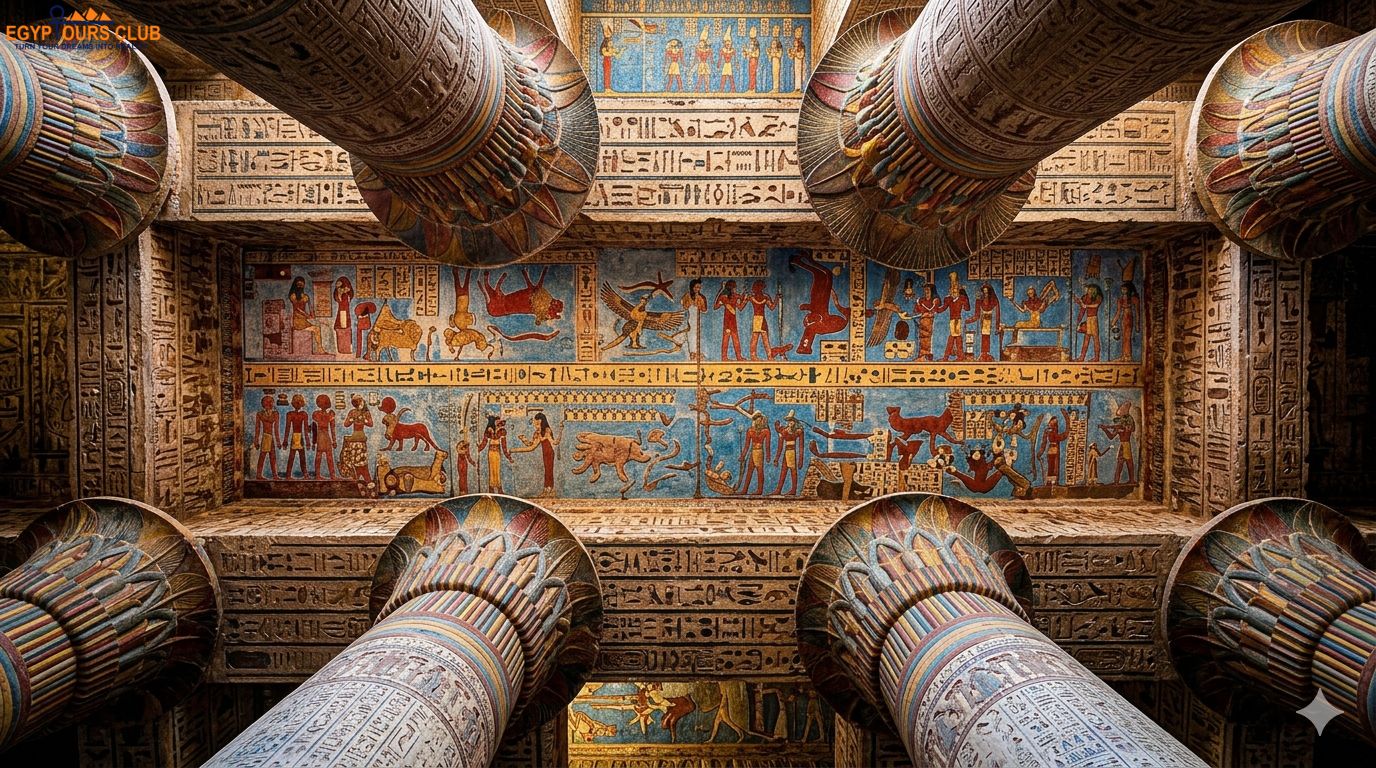
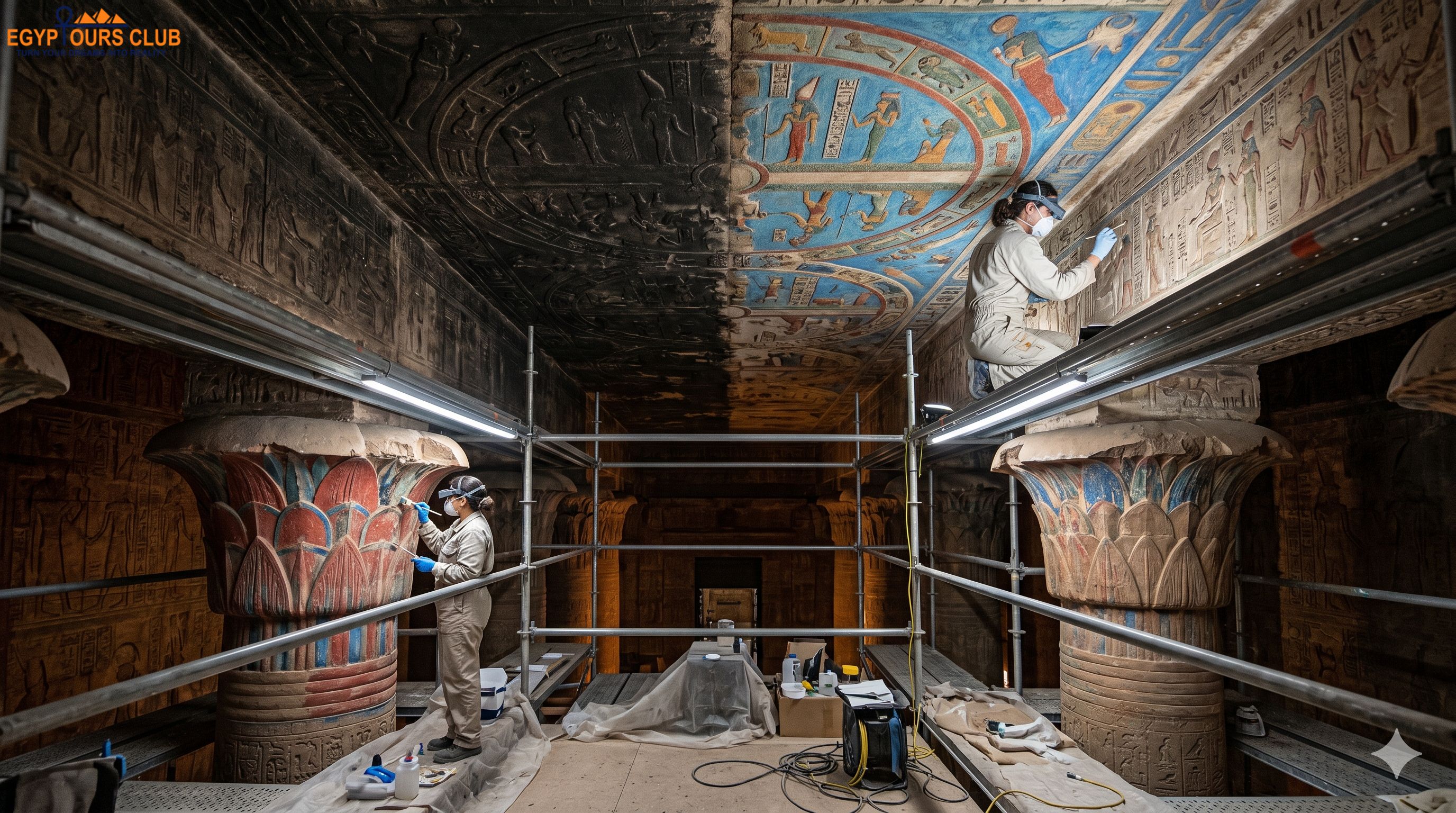
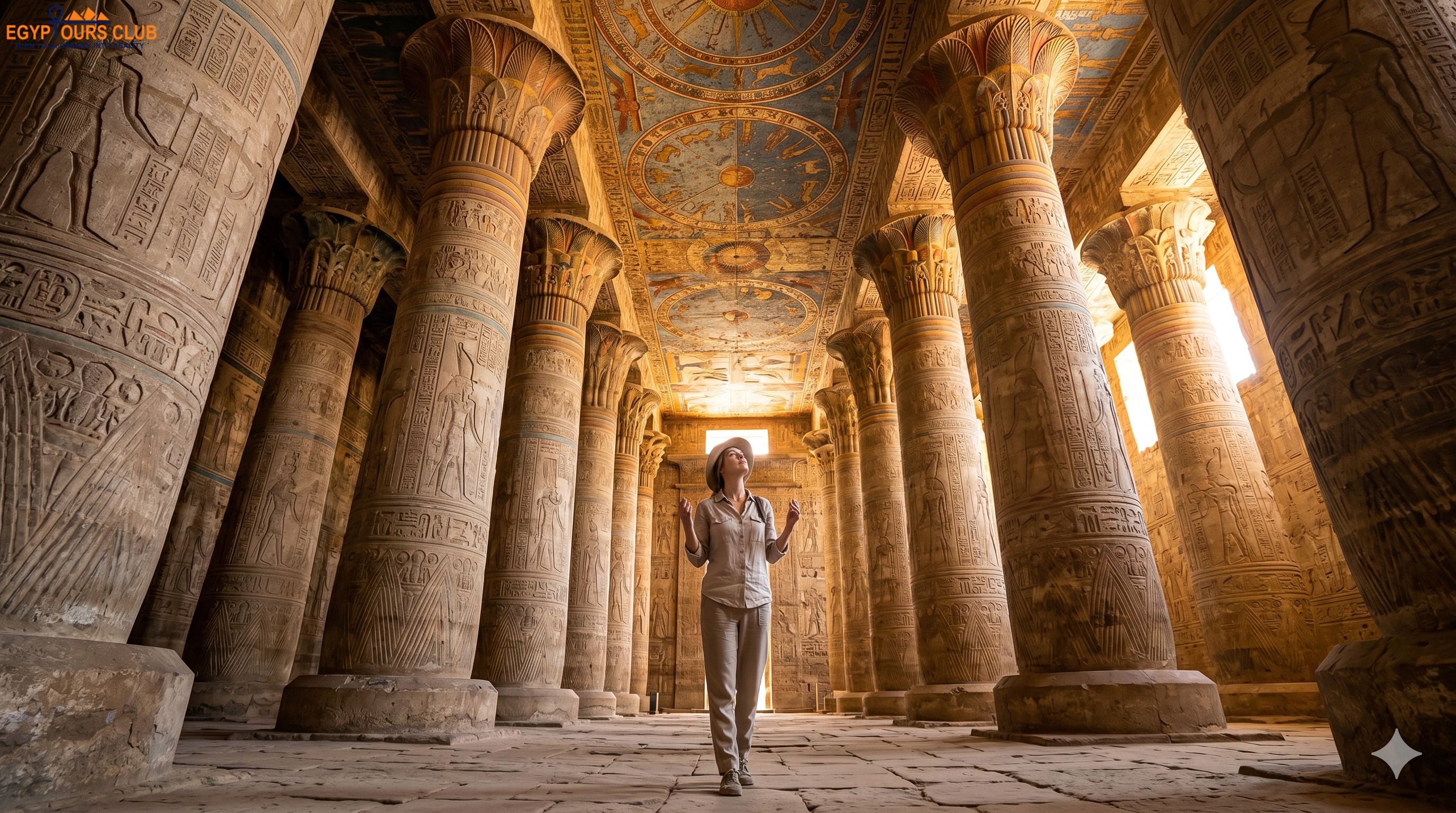
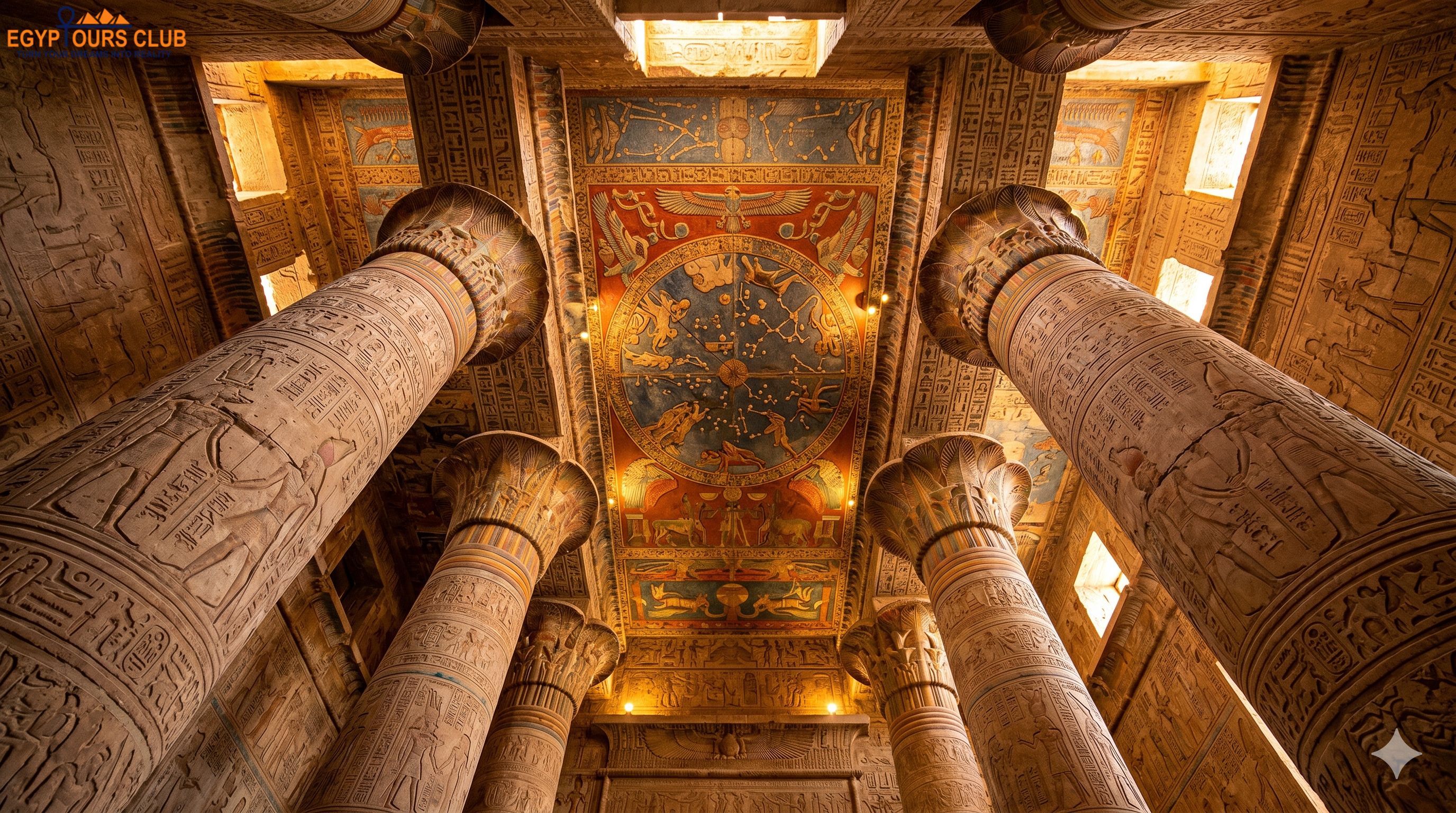
Esna Temple Luxor Egypt: The Restored Temple of Khnum and Its Stunning Zodiac Ceiling
Introduction
Esna Temple is one of the most underrated treasures in Upper Egypt. While many travelers focus on Karnak, Luxor Temple, or the Valley of the Kings, Esna Temple Luxor Egypt offers something very different: a quieter, more intimate, and visually surprising experience centered on the Temple of Khnum, one of the most remarkable surviving temples from the Ptolemaic and Roman periods.
If you are wondering what is Esna Temple, the simplest answer is this: it is the surviving entrance hall, or Esna pronaos, of a much larger ancient temple dedicated to Khnum god Egypt, his divine family, and the goddess Neith. Today, the site is especially famous for its spectacular restored ceiling, its rich color, and its rare astronomical and zodiac imagery. That is exactly why searches such as Esna Temple explained, Esna Temple restoration, and Esna Temple ceiling have become much stronger in recent years.
For travelers looking beyond the standard circuit, Temple of Esna is one of the true hidden gems in Luxor and one of the best temples near Luxor. It combines religion, architecture, art, and restoration in a way that feels both ancient and newly rediscovered.
📊 Quick Overview Table
| Topic | Answer |
|---|---|
| Main name | Esna Temple / Temple of Khnum |
| Location | Esna, south of Luxor, Egypt |
| Main deity | Khnum creator god |
| Other deities | Menhit goddess Esna, Nebtu goddess Esna, Heka, and Neith at Esna Temple |
| Main surviving part | The Esna pronaos |
| Best known for | Restored painted ceiling, zodiac, astronomical reliefs |
| Historical period | Ptolemaic and Roman |
| Why visit | One of the most impressive Roman temple in Egypt sites with vivid restored colors |
This table gives the fastest answer to what is Esna Temple, why is Esna Temple important, and why it stands out among temples south of Luxor.
🏺 What Is Esna Temple?
The Temple of Esna, also called the Temple of Khnum or Khnum Temple Esna, is a temple complex dedicated primarily to Khnum, the ram-headed creator god, along with Menhit, Nebtu, Heka, and Neith. In modern travel language, Esna Temple attraction works so well because the site offers both historical depth and visual drama.
Khnum himself was one of the major deities of southern Egypt. Britannica describes Khnum as an ancient Egyptian god of fertility, water, and procreation who was also believed to create humankind from clay on a potter’s wheel. That identity is essential for understanding the Temple of Khnum history and why Khnum Temple Luxor remains such an important stop for anyone interested in theology as well as architecture.
So if a reader asks Esna Temple explained, the best answer is this: Esna Temple is a late Egyptian temple, largely from the Ptolemaic and Roman eras, best known today for its surviving hall, its vivid restored colors, and its connection to the creator god Khnum.
🧱 History of Esna Temple
The history of Esna Temple reflects the long life of Egyptian religion under changing rulers. The temple was constructed during the Ptolemaic period and continued into Roman times, making it an excellent example of a Ptolemaic Roman temple Egypt site. Britannica notes that temples such as Esna, Dendera, Edfu, Kom Ombo, and Philae allow the Egyptian cult temple to be studied especially well in the later periods of Egyptian history.
That later chronology is one reason why Roman temple in Egypt and even last Roman temple Egypt appear in search behavior around Esna. The temple is not “last” in a strict single-site sense, but it is one of the most important surviving examples of temple building and decoration in Roman Egypt. Archaeology Magazine even notes that only a small number of major Roman-period Egyptian temples survive well today, and Esna is among the best preserved.
The surviving hall was gradually buried under later settlement layers, and the temple today sits well below modern street level. That unusual setting is part of what makes Esna Temple Luxor Egypt feel so distinctive compared with more open monumental sites.
👑 The Temple of Khnum and His Divine Family
The religious identity of the site is one of its strongest SEO and storytelling angles. This is not just any temple — it is the Temple of Khnum, dedicated to Khnum god Egypt and his family. UNESCO HIST notes that the temple is dedicated to Khnum, his consorts Menhit goddess Esna and Nebtu goddess Esna, their son Heka, and also Neith at Esna Temple.
This matters because Khnum was not a minor deity. As Khnum creator god, he was associated with creation, fertility, and the Nile’s life-giving force. His mythology gives the temple a deeper theological weight than many quick travel summaries reveal. That makes Temple of Khnum, Khnum Temple Esna, and Khnum Temple Luxor especially valuable keywords to build into the article.
For visitors, this religious context transforms the site from a pretty monument into a meaningful sacred complex — one where the carvings, columns, and ceiling all belong to a larger divine narrative.
🌌 Esna Temple Ceiling, Zodiac, and Astronomical Reliefs
The biggest reason Esna Temple has become so visually compelling in recent years is the restoration of its ceiling. ARCE describes the temple as a rare example of a Greco-Roman temple with a large astronomical ceiling in the pronaos. National Geographic reported that conservation work revealed vivid colors and celestial imagery, including zodiac signs, planets, and constellations.
This is why keywords like:
- Esna Temple ceiling
- Esna Temple painted ceiling
- Esna Temple colors
- Esna Temple zodiac
- Esna zodiac ceiling
- Esna astronomical ceiling
- Khnum Temple ceiling image
- restored Esna Temple ceiling
are not just decorative SEO additions — they are central to the real modern appeal of the site.
The restored ceiling has changed how many people see Esna. Instead of being treated as a lesser stop compared with Luxor’s larger monuments, it now stands out as one of the most visually exciting temple interiors in Egypt.

🏛️ Esna Pronaos and Ancient Temple Architecture
The main part visible today is the Esna pronaos, the grand front hall of the temple. Archaeology Magazine describes it as the surviving red sandstone entrance hall of a much larger complex. This makes the site a powerful case study in ancient temple architecture Esna and the evolution of sacred design in late Egyptian religion.
The hall’s heavy columns, carved capitals, and dense inscriptions make Esna Temple columns, Esna Temple reliefs, and Esna Temple interior important visual keywords. Unlike some temples that impress mainly with outer scale, Esna is especially strong as an interior visual experience.
For readers interested in architecture, this is one of the best places to understand how Egyptian temple design continued to flourish under Ptolemaic and Roman rule. That is why Roman temple in Egypt and Ptolemaic Roman temple Egypt fit naturally here.
🎨 Esna Temple Restoration and Why It Matters
The Esna Temple restoration is not just a conservation story — it is a core reason the site now attracts renewed international attention. ARCE notes that the project uncovered long-hidden colors and astronomical scenes, while National Geographic emphasized that layers of soot and dirt had protected the reliefs for nearly 2,000 years.
This is important because restoration at Esna did more than clean surfaces. It changed the visitor experience. Travelers now see a temple with extraordinary pigment, clearer iconography, and stronger contrast than what earlier generations encountered. That is why Esna Temple photos and Esna Temple travel guide have become more compelling in the modern travel landscape.
From an SEO perspective, this restoration angle is gold:
- it creates freshness
- it supports visual search
- it adds a modern-news hook
- it gives the site a reason to rank beyond generic temple pages

📸 Why Esna Temple Feels Like a Hidden Gem Near Luxor
A major part of the page’s search intent should come from hidden temple near Luxor, hidden gems in Luxor, temples south of Luxor, and best temples near Luxor. Esna works beautifully for that angle because it offers:
- a shorter and quieter visit
- an exceptionally photogenic interior
- distinctive Roman-era character
- restoration-driven color that many travelers do not expect
Instead of competing directly with Karnak or Luxor Temple on monumentality, Esna Temple attraction wins on surprise, color, and intimacy. For experienced travelers, this is often exactly what makes a site memorable.
This also makes it an ideal addition to itineraries for travelers who want more than the standard checklist. In that sense, Esna Temple travel guide should not sell the site as “smaller Luxor.” It should sell it as “one of the most unique temple interiors in Upper Egypt.”
🎟️ Esna Temple Tour, Tickets, and Visit Value
From a travel perspective, Esna Temple tour, Temple of Khnum tour, Luxor day tour Esna Temple, Esna Temple tickets, Esna Temple opening hours, and Esna Temple visit guide are all highly relevant. Even when people do not book Esna as a standalone destination, it naturally fits into broader Upper Egypt itineraries.
For many itineraries, Esna works well as:
- a stop south of Luxor
- a complement to Edfu and Kom Ombo
- a specialist add-on for travelers interested in painted ceilings and late temple art
- part of a broader Luxor West Bank and Esna tour
This is where the article should subtly reinforce commercial intent: Esna is not only interesting; it is worth building into a real itinerary.

✅ Final Answer
So, what is Esna Temple?
Esna Temple Luxor Egypt is the surviving front hall of the Temple of Khnum, a major Ptolemaic Roman temple Egypt site dedicated to Khnum and his divine family. It is best known today for its restored painted ceiling, its zodiac and astronomical reliefs, and its status as one of the most visually striking and underrated temples in Upper Egypt.
If you want the shortest summary:
Esna Temple is the restored Temple of Khnum — a hidden gem near Luxor famous for its vivid zodiac ceiling, Roman-era architecture, and beautifully preserved interior.
FAQ
What is Esna Temple?
Esna Temple is a temple in Esna, south of Luxor, dedicated mainly to the god Khnum and best known today for its restored painted ceiling and Roman-era entrance hall.
Why is Esna Temple important?
It is important for its religious dedication to Khnum, its rare astronomical ceiling, and its value as one of the best-preserved late Egyptian temple halls.
What is the Temple of Khnum?
The Temple of Khnum is another name for Esna Temple, the sacred complex dedicated to Khnum, Menhit, Nebtu, Heka, and Neith.
Why is the Esna Temple ceiling famous?
The ceiling is famous because restoration revealed vivid original colors, zodiac signs, planets, and astronomical imagery.
Is Esna Temple a Roman temple in Egypt?
Yes. The surviving temple hall belongs largely to the Ptolemaic and Roman periods, making it one of the most important Roman-era temple sites in Egypt.
Who is Khnum in Egyptian religion?
Khnum was a ram-headed creator god associated with fertility, water, and the formation of human beings on a potter’s wheel.
Is Esna Temple worth visiting?
Yes. It is one of the best hidden temple experiences near Luxor, especially for travelers interested in restored color, temple interiors, and quieter archaeological sites.