


Abydos Temple of Seti I Egypt: King List, Osireion & Travel Guide
Galleria
Abydos Temple of Seti I Egypt: The Sacred Temple of Kings, Osiris, and Eternal Memory
Introduction
The Abydos Temple of Seti I is one of the most important sacred monuments in ancient Egypt. Located at Abydos in Upper Egypt, the temple is not only a masterpiece of royal architecture but also part of one of the most spiritually powerful landscapes in the country. Abydos was an early royal cemetery and later became a major pilgrimage center connected to the worship of Osiris, making it a true sacred city of Osiris.
If you are asking what is Abydos Temple of Seti I, the best answer is this: it is the great temple built by Seti I at Abydos, famous for its refined reliefs, the Abydos King List, its connection to the cult of Osiris, and the nearby Osireion Abydos. Britannica describes the temple as one of the most beautiful of all Egyptian temples, with a unique plan featuring seven sanctuaries approached through two broad hypostyle halls.
For modern travelers, Abydos Temple of Seti I Egypt is more than a historical monument. It is one of the most rewarding hidden temple in Upper Egypt experiences and one of the best temples in Upper Egypt for visitors who want something deeper, quieter, and more spiritually resonant than the standard itinerary.
📊 Quick Overview Table
| Topic | Answer |
|---|---|
| Main name | Abydos Temple of Seti I / Temple of Seti I Abydos |
| Location | Abydos, Upper Egypt |
| Main builder | Seti I, later completed in part by Ramesses II |
| Best known for | Abydos King List, Osiris cult, refined reliefs |
| Religious importance | Major Abydos pilgrimage site tied to Osiris |
| Nearby mystery site | Osireion Abydos |
| Why visit | One of the greatest and most meaningful sacred temples in Egypt |
This table gives the quickest answer to Abydos Temple explained, Abydos Temple facts, and why is Abydos Temple important.
🏺 What Is Abydos Temple of Seti I?
The Temple of Seti I Abydos, also called the Great Temple of Abydos, was built by Pharaoh Seti I and associated with the cult of Osiris, royal ancestors, and the principal gods of Egypt. The site at Abydos had already been sacred for centuries, but Seti’s temple turned it into one of the most remarkable royal cult centers of the New Kingdom.
The temple’s importance comes from several layers at once. It is a royal monument, an Osirian sacred center, and a site that preserves one of the most famous king lists in Egyptian history. This combination is why Abydos Egypt temple and Abydos Temple attraction work so well as both historical and travel keywords.
So if a reader searches Abydos Temple of Seti I Luxor, the location is technically farther south near Sohag rather than within Luxor itself, but the site is often marketed from Luxor as part of broader Upper Egypt day tours. That is why the Luxor travel angle remains commercially valuable even if the temple is not in Luxor proper.
🧱 History of Abydos Temple of Seti I
The history of Abydos Temple of Seti I begins with the larger sacred history of Abydos itself. UNESCO’s Abydos listing describes the city as one of the oldest and most important places in ancient Egypt, rising in importance with the cult of Osiris and serving as a place associated with his tomb. ARCE also notes that Abydos later became a pilgrimage center for the worship of Osiris and a place where the cults of deified kings were celebrated.
Seti I constructed the temple during the 19th Dynasty, and Ramesses II completed or added parts after his father’s death. This is why Seti I and Abydos and Ramesses II at Abydos are both important interpretive angles. The temple is not just Seti’s monument in isolation; it also reflects royal continuity and dynastic memory.
Britannica emphasizes the temple’s unusual plan, with seven sanctuaries dedicated to the pharaoh and principal gods of Egypt. That architectural richness is one of the strongest reasons the site ranks among the finest sacred monuments in the country.
🌟 Why Was Abydos Sacred?
The answer to why was Abydos sacred lies in Osiris. Abydos became one of the most important centers of the Abydos cult of Osiris, the god associated with death, resurrection, kingship, and the afterlife. UNESCO notes that the city’s importance rose with the establishment of the Osiris cult, and mythologically the city was believed to hold his principal tomb.
This is why phrases like ancient pilgrimage center Egypt, sacred city of Osiris, and Abydos pilgrimage site are not just poetic labels — they are historically grounded. Pilgrims traveled to Abydos because it was one of the holiest places in the Egyptian religious imagination.
That sacred status gives the temple a spiritual depth that many other sites do not have. It was not simply a political statement in stone; it was a place where royal memory, divine resurrection, and collective devotion all met.
👑 The Abydos King List
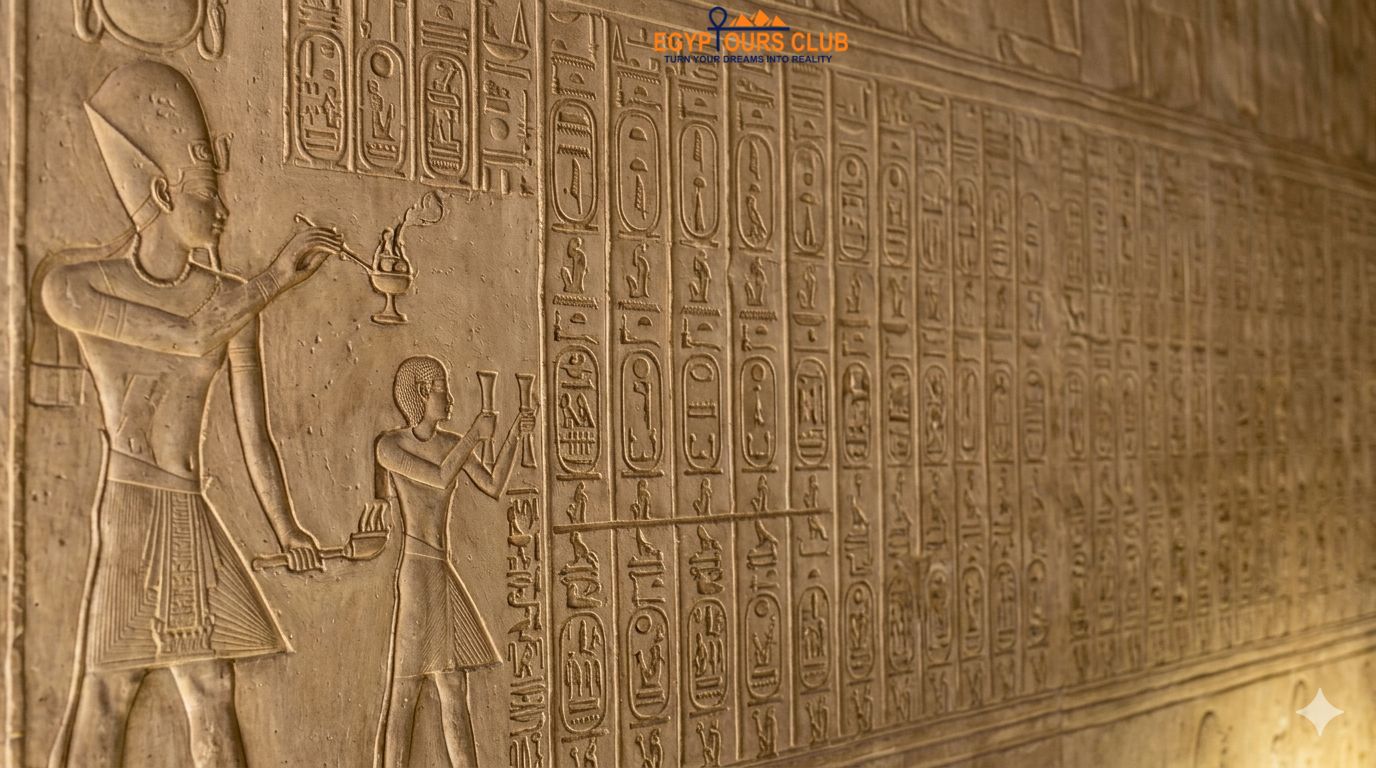
One of the most famous features of the Seti I Temple Abydos is the Abydos King List, also called the Abydos royal ancestors list. Britannica explains that this relief shows Seti and his son Ramesses making offerings to the cartouches of 76 dead predecessors, beginning with Menes. It is one of the most valuable royal lists from ancient Egypt.
This is one reason why Abydos King List image is such a strong visual keyword and why the temple matters so much to historians. The list is not a simple decorative panel. It is a statement of royal legitimacy, sacred ancestry, and dynastic continuity. In other words, it is about memory, order, and kingship.
The list also reflects political selection. Certain rulers were omitted, which shows that the Abydos royal ancestors list was not a neutral modern chronology but an ideological monument created in a sacred royal setting.

🏛️ Osireion Abydos
Behind the temple lies one of the most intriguing structures in Upper Egypt: the Osireion Abydos. Britannica calls it a remarkable structure thought to be Seti’s cenotaph, located just behind the temple. Other scholarship often treats it as a symbolic tomb of Osiris closely tied to the Osirian theology of Abydos.
The Osireion Abydos image search intent is strong because the structure looks and feels very different from the main temple. Built of massive stone blocks and associated with water symbolism and resurrection, it adds a mysterious and ancient atmosphere that reinforces the sacred identity of Abydos.
From an SEO and storytelling perspective, this is pure gold. It allows the article to cover:
- Osireion Abydos
- Osiris temple Abydos
- sacred resurrection symbolism
- pilgrimage and ritual space
- hidden depth behind the temple itself
This is also why Abydos sacred art and sacred architecture themes fit so naturally here. The site is not only beautiful — it is conceptually powerful.
🎨 Abydos Temple Reliefs, Columns, and Sacred Art
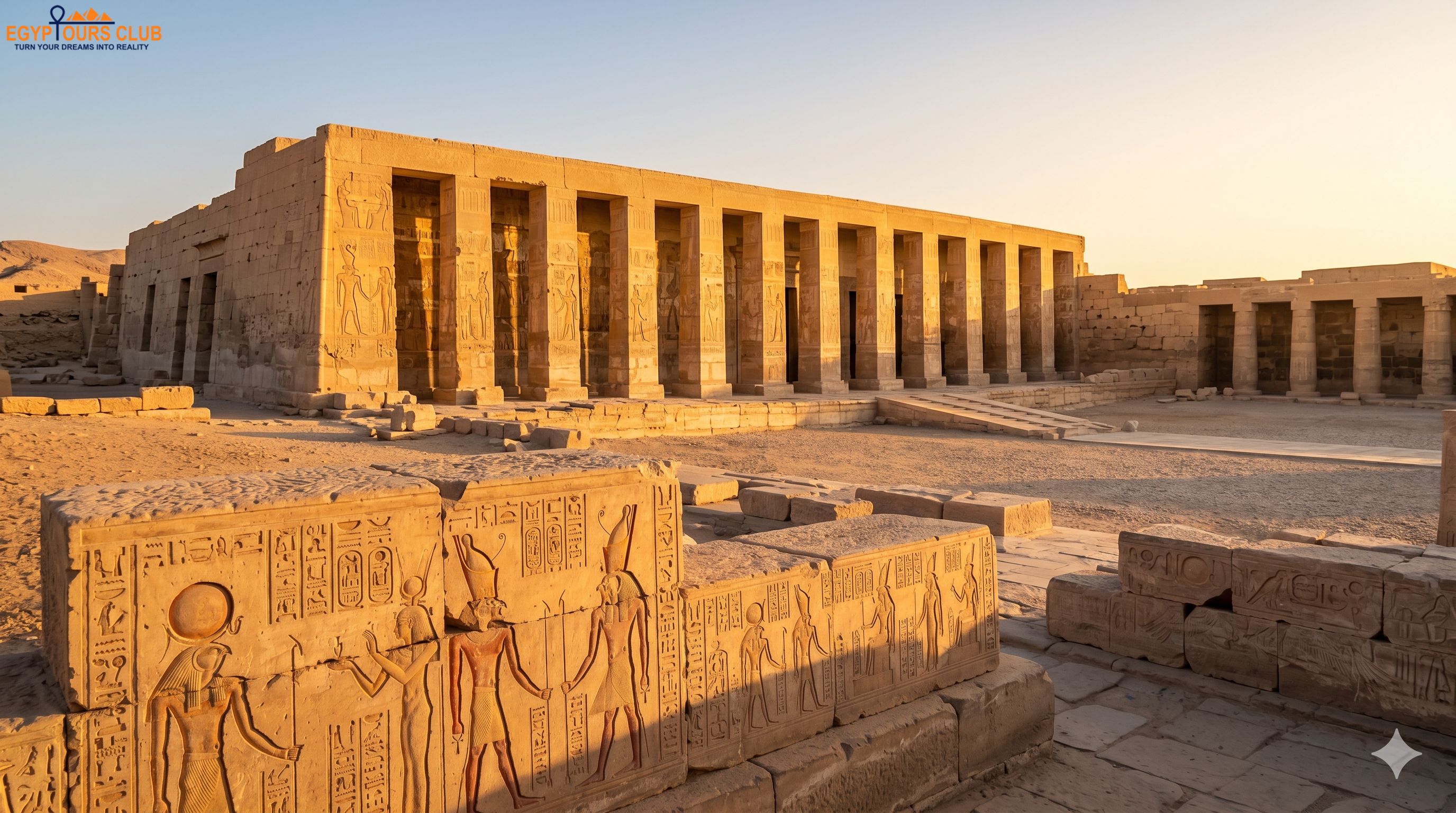
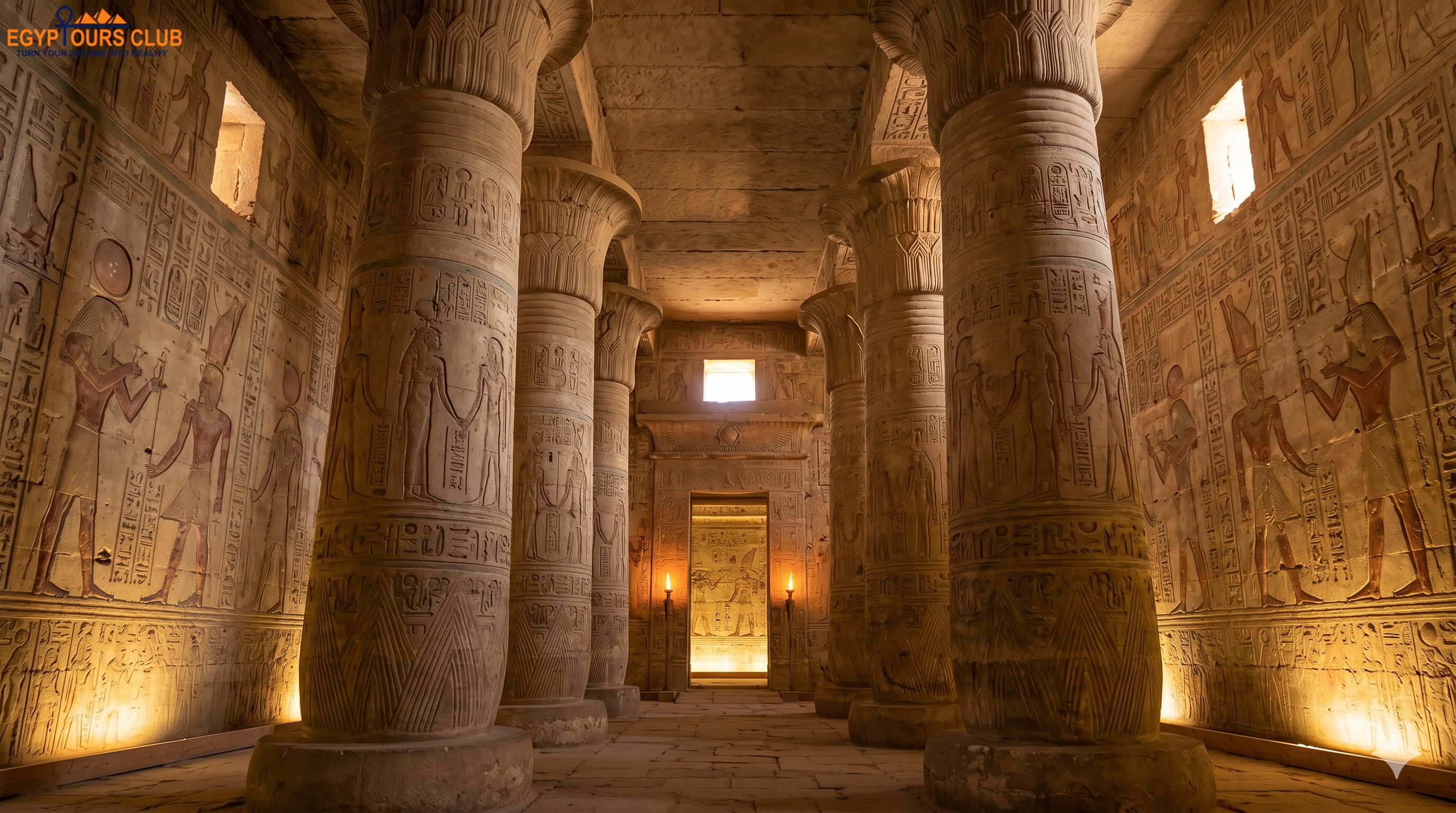
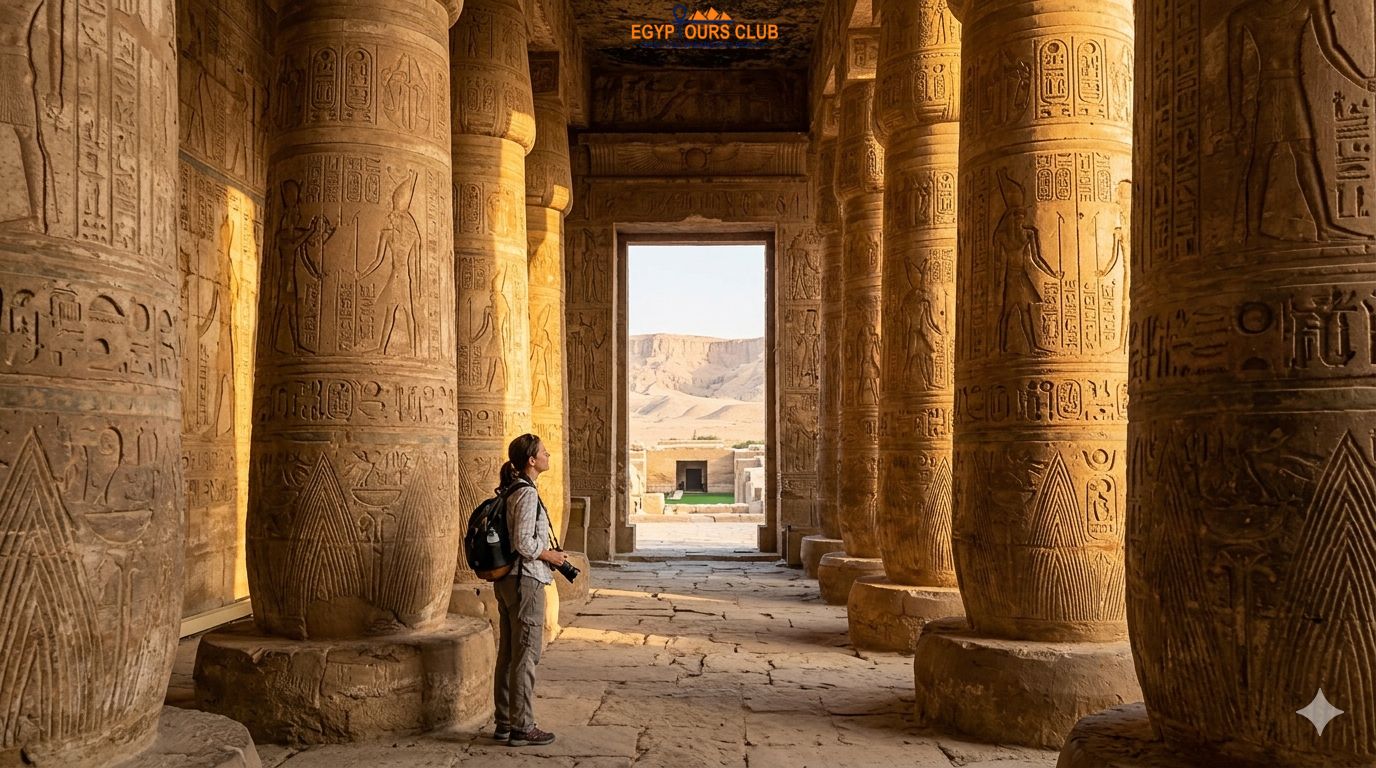
The visual strength of the temple is another reason why it deserves a high-authority page. Britannica specifically notes the delicacy and beauty of the reliefs decorating the temple. Searches such as Abydos Temple reliefs, Abydos Temple wall carvings, Seti I Temple reliefs, Temple of Seti I carvings, Abydos Temple columns, and Abydos Temple interior are all supported by the extraordinary quality of the surviving decoration.
Unlike many monuments that impress mainly through scale, Abydos often impresses through refinement. The carvings are precise, elegant, and spiritually charged. This makes Abydos Temple photos and Abydos sacred art especially valuable in search and visual content.
For travelers and readers alike, the temple’s artistic quality helps explain why is Abydos Temple important beyond its historical facts. It is one of the most beautiful narrative temples in Egypt.

🧭 Abydos as a Hidden Temple in Upper Egypt
From a travel perspective, hidden temple in Upper Egypt is one of the best angles for Abydos. It has immense historical value, yet it remains outside the standard path of many first-time travelers. That makes it one of the most meaningful sacred temples near Luxor even if it lies farther south in the Sohag region.
Because of this, keywords like:
- best temples in Upper Egypt
- things to do in Abydos Egypt
- Abydos Temple visit guide
- Abydos Temple attraction
all fit the page naturally. Abydos offers a stronger sense of sacred atmosphere and historical depth than many more crowded sites. For travelers who already know the classics, it often becomes a highlight precisely because it feels less commercial and more spiritually resonant.
🚐 Abydos Temple Day Tour and Luxor Travel Angle
The commercial side of the page should not be ignored. Abydos Temple day tour, Luxor to Abydos tour, Temple of Seti I guided tour, and Abydos and Dendera tour are all strong travel-intent keywords because Abydos is commonly paired with Dendera or offered as a longer excursion from Luxor. Ticketing sources and tour operators consistently market it in that framework.
This is where the page can convert interest into action. Someone searching Abydos Temple tickets or Abydos Temple opening hours is closer to travel planning, while someone searching history of Abydos Temple of Seti I is still in research mode. The page should satisfy both.
In practical terms, Abydos is ideal for:
- travelers staying in Luxor who want a deeper Upper Egypt experience
- history lovers interested in Osiris and sacred kingship
- visitors who want more than the standard temple circuit
- culture-focused itineraries that combine Abydos with Dendera

✅ Final Answer
So, what is Abydos Temple of Seti I?
Abydos Temple of Seti I is one of the greatest sacred temples in Egypt — a masterpiece of royal architecture built in one of the holiest cities of ancient Egyptian religion. It is famous for the Abydos King List, the nearby Osireion Abydos, its refined reliefs, and its central role in the Abydos cult of Osiris.
If you want the shortest summary:
The Temple of Seti I at Abydos is the sacred royal temple of one of Egypt’s holiest cities, combining kingship, Osiris worship, the Abydos King List, and some of the finest reliefs in Upper Egypt.
FAQ
What is Abydos Temple of Seti I?
It is the great temple built by Seti I at Abydos, famous for its sacred Osiris connection, beautiful reliefs, and the Abydos King List.
Why is Abydos Temple important?
It is important because Abydos was a major pilgrimage center of Osiris, and the temple preserves one of the finest sacred architectural and historical records in Egypt.
What is the Abydos King List?
The Abydos King List is a relief inside the temple showing Seti I and Ramesses II honoring a selected sequence of Egyptian kings.
What is the Osireion at Abydos?
The Osireion is a remarkable structure behind the temple, often interpreted as Seti I’s cenotaph or a symbolic tomb linked to Osiris.
Why was Abydos sacred?
Abydos became sacred because of its association with the cult of Osiris and its role as an early royal and religious center.
Is Abydos worth visiting from Luxor?
Yes. Abydos is one of the most meaningful day-trip options from Luxor, especially when combined with Dendera.
What can you see at the Temple of Seti I?
Visitors can see refined reliefs, hypostyle halls, the Abydos King List, sacred chapels, and the nearby Osireion.