


Deir el-Medina Luxor Egypt: Workers’ Village, Tombs & History
Gallery
Deir el-Medina Luxor Egypt: The Workers’ Village of Ancient Egypt
Introduction
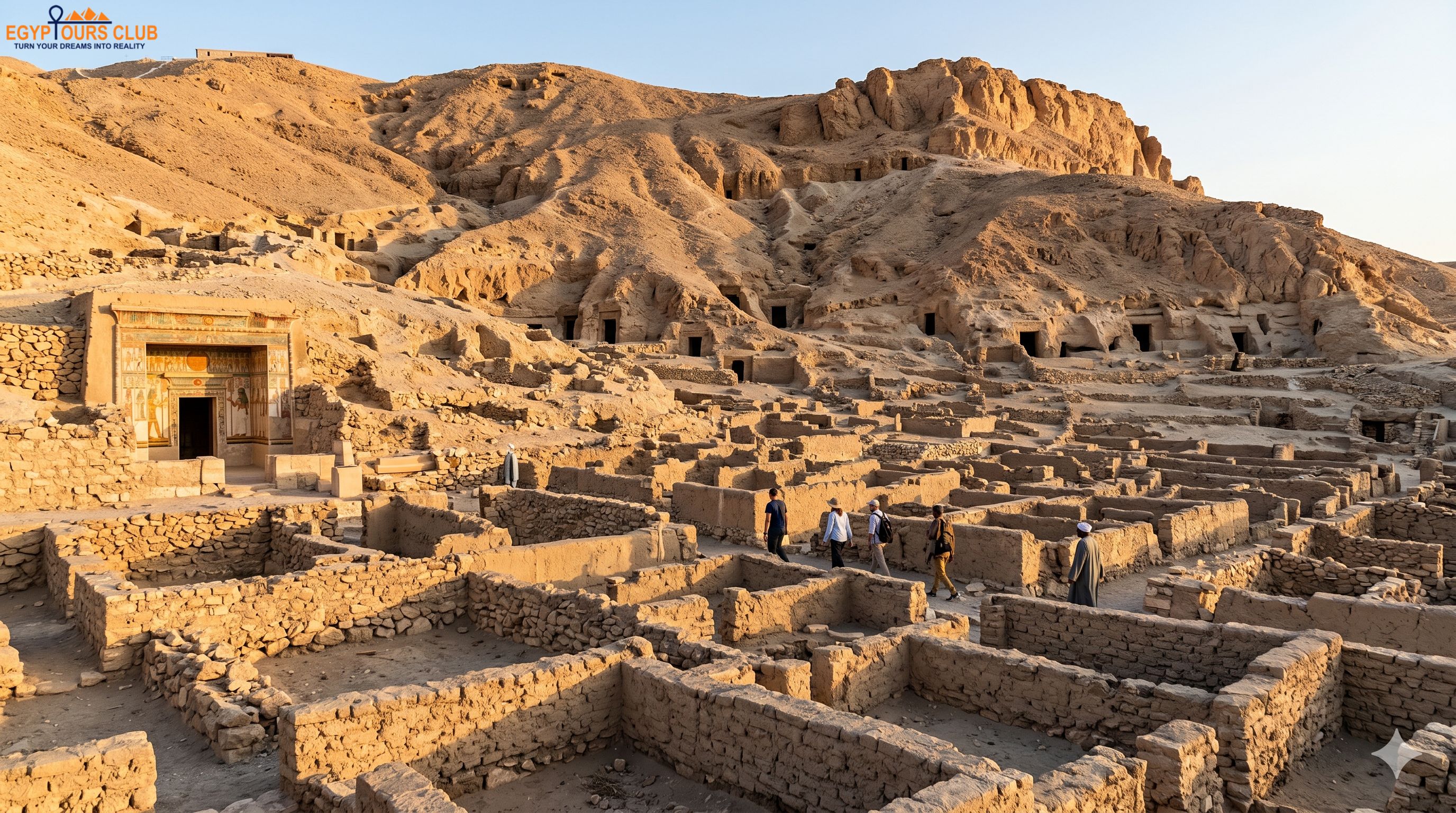
Deir el-Medina is one of the most fascinating archaeological sites in Luxor because it shows a side of ancient Egypt that many visitors never expect: not kings, not giant temples, but the real community of people who built and decorated the royal tombs. Located on the west bank of Luxor and part of the Theban necropolis, Deir el-Medina Luxor Egypt was the settlement of the skilled artisans and craftsmen who worked on the tombs of the Valley of the Kings and the Valley of the Queens during the New Kingdom.
That is why Deir el-Medina workers village is such a powerful keyword and such an important historical concept. This was not a random village. It was a planned settlement connected directly to the royal burial program of ancient Egypt. The site’s ancient name, Set Maat Place of Truth, reflects that official identity, and the workers themselves were known as the “Servants in the Place of Truth.”
If you want Deir el-Medina explained simply, this is the best answer: it was the ancient workers village Egypt where the royal tomb builders, painters, scribes, and craftsmen lived while creating some of the most famous tombs in Egyptian history.
📊 Quick Overview Table
| Topic | Answer |
|---|---|
| Location | Luxor West Bank, part of the Theban necropolis |
| Best known for | Workers’ village of royal tomb builders |
| Historical period | Mainly the New Kingdom, 18th–20th Dynasties |
| Ancient name | Set Maat / Place of Truth |
| Main people | Artisans, scribes, painters, and workmen |
| Why it matters | Best evidence for daily life of royal craftsmen in ancient Egypt |
| Main highlights | Village ruins, private tombs, colorful wall paintings |
This table summarizes the essentials of what is Deir el-Medina, why is Deir el-Medina important, and why it stands out from many other sites in Luxor.
🏺 What Is Deir el-Medina?
If you are asking what is Deir el-Medina, the answer is very specific: it was a workers village Luxor created for the people who cut, decorated, painted, and organized the royal tombs nearby. These were the Valley of the Kings workers and the highly specialized artisans of Deir el-Medina who served the pharaohs during the New Kingdom.
Unlike many archaeological sites that focus mainly on kings, temples, or large monuments, Deir el-Medina village is special because it gives direct evidence for ordinary-but-highly-skilled people. The village is widely recognized as one of the best-preserved settlements of its kind, and scholars rely on it for insight into wages, religion, family life, work organization, and social tension in ancient Egypt.
This is why royal craftsmen village Egypt and tomb builders village Egypt are such important angles. Deir el-Medina is one of the best places in Egypt to understand how ancient work, administration, and artistic production actually functioned.
🧱 History of Deir el-Medina
The history of Deir el-Medina begins in the early New Kingdom. The village is generally associated with the royal building program from the time of Thutmose I onward, when the nearby royal cemeteries of western Thebes became major burial zones. It remained active through the 18th, 19th, and 20th Dynasties, serving the artisans who built and decorated elite royal tombs.
Its ancient name, Set Maat Place of Truth, is one of the most revealing facts about the site. It shows that the community was tied to official state ideology and to the sacred work of preparing royal burials. The workers were not generic laborers but highly organized teams of skilled specialists.
Many records from the village also survive, making Deir el-Medina facts especially rich compared with other sites. These documents help historians reconstruct legal disputes, wages, family life, religious practice, and even labor unrest. Deir el-Medina is associated with what is often described as one of the earliest recorded strikes in history during the reign of Ramesses III, when workmen protested delayed supplies.
👷 Deir el-Medina Workers Village
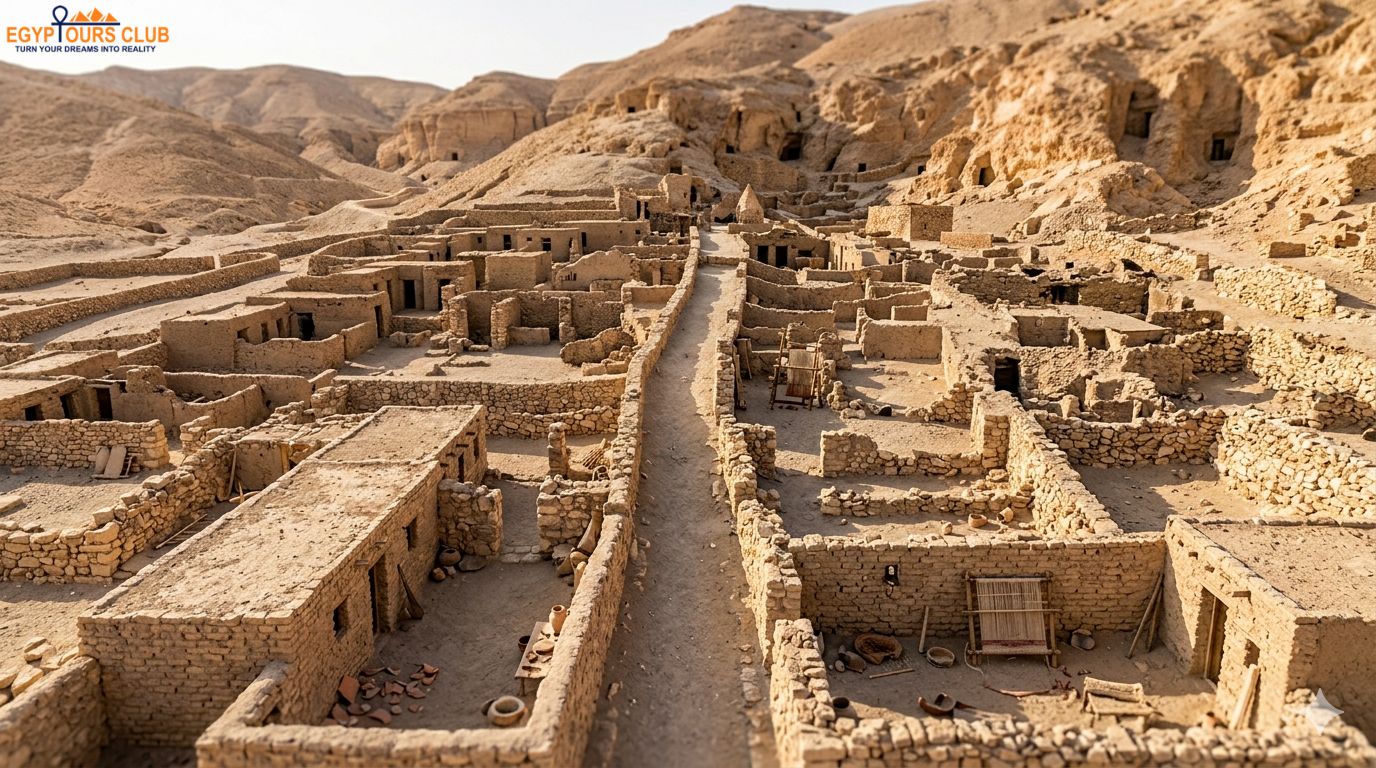
The heart of the site is the Deir el-Medina workers village itself. This was the home of the ancient Egyptian artisans who carried out some of the most refined work in the royal necropolis. The village included houses, chapels, storage spaces, and the social fabric of a state-supported community whose job was to create eternal homes for pharaohs and members of the royal family.
The people here were not unskilled laborers. They were painters, stone-cutters, plasterers, scribes, foremen, and administrators. Their organization into working crews is one of the reasons why artisans of Deir el-Medina remains such a strong historical concept. It also makes the site one of the best places to study labor structure in ancient Egypt.
This is why ancient workers village Egypt is more than a generic label. It describes one of the most valuable archaeological windows into work, class, and state organization in the New Kingdom.

🎨 Deir el-Medina Tombs and Wall Paintings
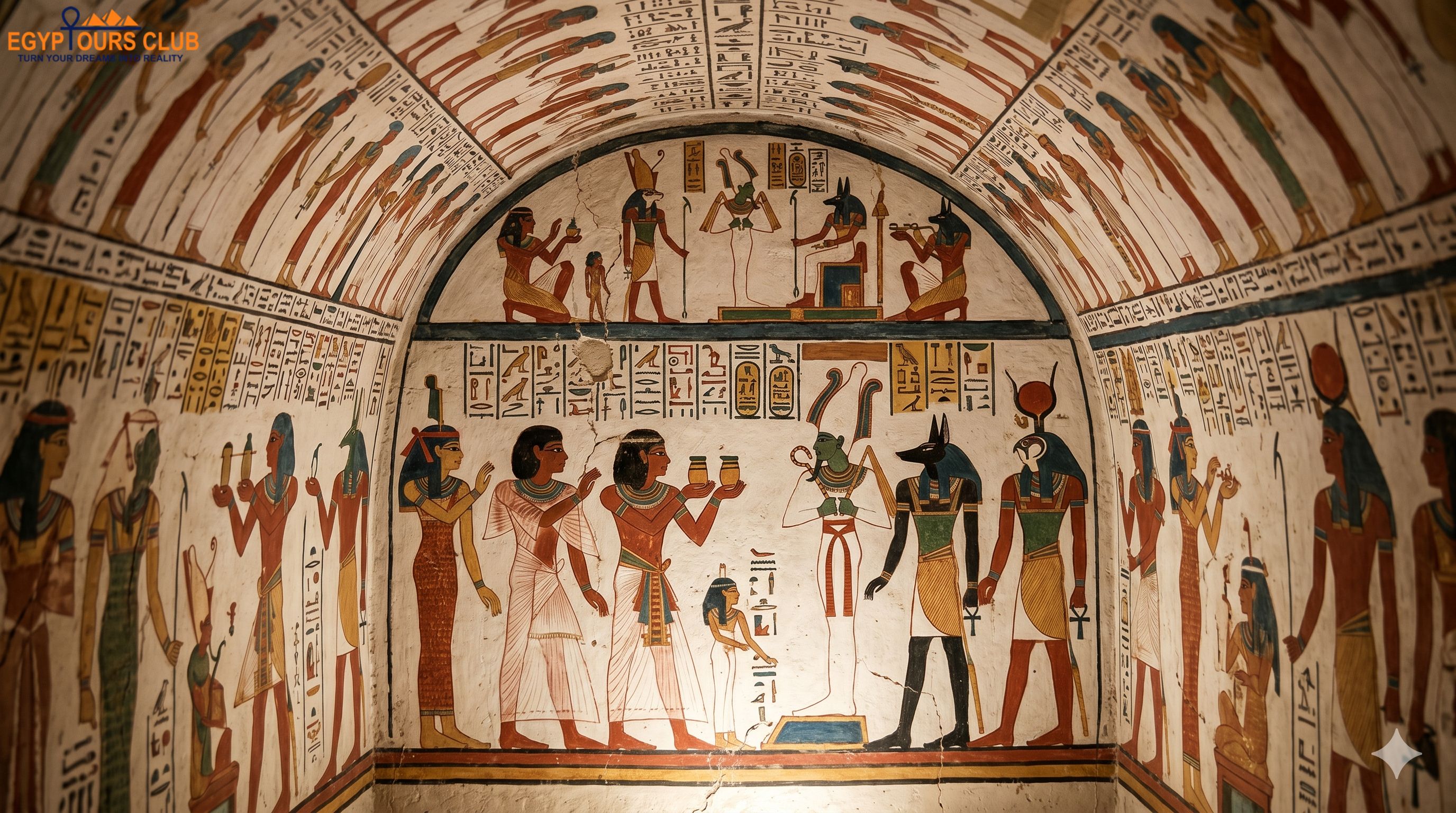
For many visitors, the most visually striking part of the site is the Deir el-Medina tombs. These are not giant royal tombs, but private tombs of the workers and officials themselves. Many are famous for their bright decoration, elegant compositions, and intimate scenes that differ in feeling from the vast royal monuments nearby.
This is where keywords like Deir el-Medina tomb paintings, Deir el-Medina wall art, and Deir el-Medina photos become especially important. The tombs preserve remarkable color and detail, making them some of the most rewarding places in Luxor for travelers interested in painting, symbolism, and private devotion rather than monumental royal scale.
The decorated tombs also help explain why is Deir el-Medina important. It is not only a village site. It is also an artistic archive of daily identity, religion, and funerary imagination among the people who created Egypt’s most famous royal tombs.
🏛️ Set Maat Place of Truth
The ancient name Set Maat Place of Truth is one of the most meaningful aspects of Deir el-Medina. It tells us that the village had a sacred and official function. The workers were not just residents of a settlement; they were people attached to a state religious mission linked to tomb building and divine kingship.
This sacred identity also explains why the site includes evidence of rich local religious life. Excavations and written records show that the villagers practiced both official and personal devotion, and that religion was deeply woven into daily life. That dimension adds even more depth to Deir el-Medina explained as a site where labor, belief, and state duty all intersected.
🙏 Amenhotep I and Ahmose Nefertari at Deir el-Medina
Two especially important names connected to the village are Amenhotep I Deir el-Medina and Ahmose Nefertari Deir el-Medina. Both were honored by the workmen’s community and came to function as protective and revered patrons of the settlement. Ancient evidence shows that they were remembered and venerated by the villagers across generations.
This is one of the most fascinating parts of the site because it shows how specific rulers could become deeply personal in local religious culture. Their presence in village devotion adds another layer to Theban necropolis village life and helps explain how royal ideology could merge with community piety.

🏠 Deir el-Medina Houses and Daily Life
One of the greatest strengths of the site is how much it reveals about ordinary living. The remains of Deir el-Medina houses help archaeologists reconstruct domestic life: room organization, household religion, work rhythms, and family structure. Because of the written evidence found at the site, Deir el-Medina offers one of the clearest pictures of daily life in ancient Egypt.
This is why the site matters far beyond architecture. Through Deir el-Medina we can study:
- work schedules
- food and supply systems
- wages and ration issues
- religious devotion
- family life
- legal disputes
- social hierarchy inside a skilled labor community
That makes the village unique among Luxor West Bank tour Deir el-Medina stops. It is not just another ruin. It is one of the best human-scale sites in all of ancient Egypt.
📸 Why Deir el-Medina Feels Different from Other Luxor Sites
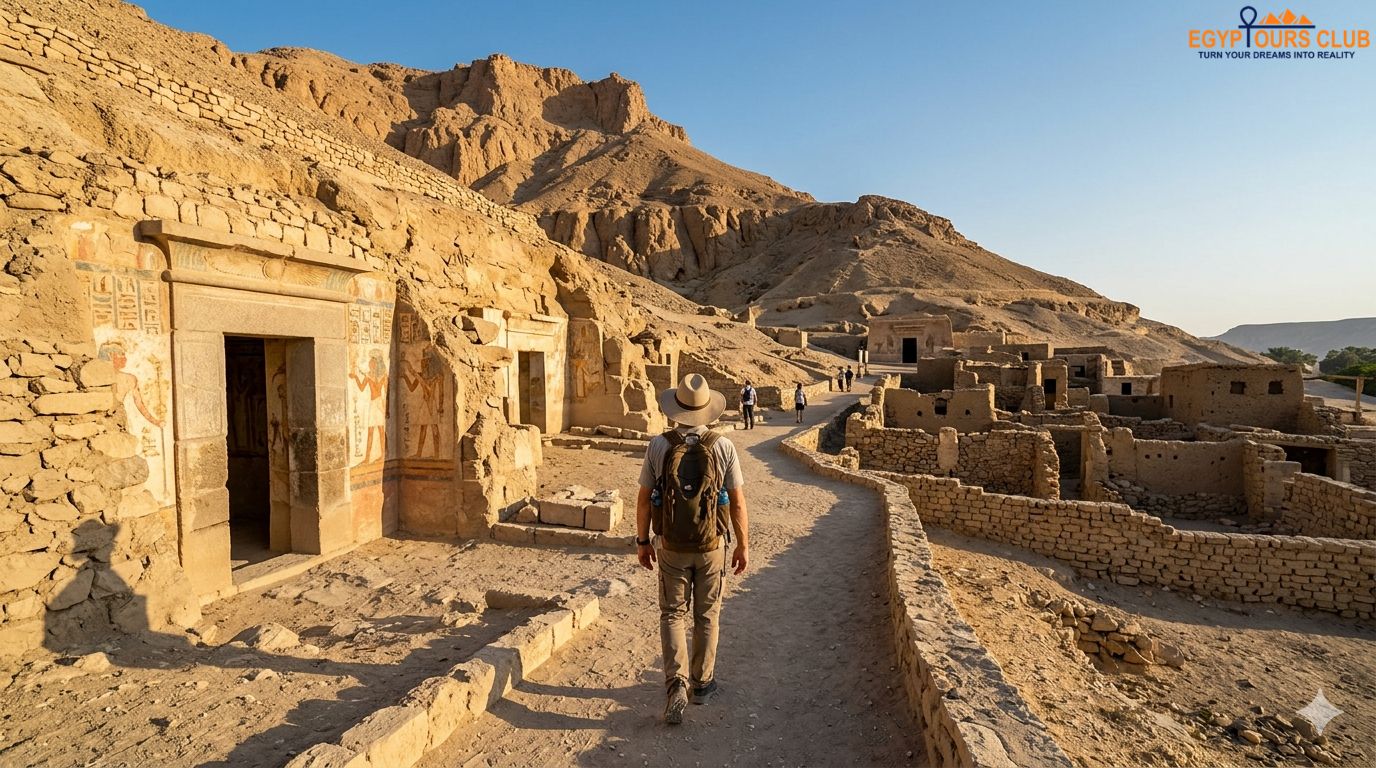
Many West Bank sites impress through scale. Deir el-Medina impresses through intimacy. Visitors often remember the village because it feels closer to real people. The Deir el-Medina village ruins and decorated tombs create a much more personal connection to ancient life than a giant temple alone.
That is why Deir el-Medina Luxor works so well as both an educational page and a travel-intent page. It appeals to readers who want:
- daily life in ancient Egypt
- the story of tomb builders
- colorful wall paintings
- something beyond the standard Luxor checklist
It is also a perfect supporting page for broader workers village Luxor and Valley of the Kings workers content clusters.
🎟️ Deir el-Medina Tour Value
From a travel perspective, Deir el-Medina tour and Luxor West Bank tour Deir el-Medina are strong keywords because the site fits naturally into West Bank itineraries alongside the Valley of the Kings, Valley of the Queens, Hatshepsut Temple, and other Theban necropolis sites. World History Encyclopedia explicitly identifies Deir el-Medina as the home of the craftsmen who built and decorated the royal tombs of the nearby valleys, making that connection highly relevant for tourists.
For many travelers, the site becomes a highlight because it offers:
- fewer crowds than the biggest monuments
- strong artistic value
- richer understanding of how royal tomb projects actually worked
- a fresh narrative beyond pharaoh-centered tourism
That is a major reason why Deir el-Medina Egypt deserves a dedicated, optimized attraction page.

✅ Final Answer
So, what is Deir el-Medina?
Deir el-Medina was the workers village Luxor where the artisans, painters, scribes, and craftsmen who built the royal tombs of the Theban necropolis lived during the New Kingdom. It is one of the most important archaeological sites in Egypt for understanding daily life, labor organization, religion, and private tomb art.
If you want the shortest summary:
Deir el-Medina Luxor Egypt is the ancient village of the royal tomb builders — one of the best places in Egypt to understand the real people behind the Valley of the Kings.
FAQ
What is Deir el-Medina?
Deir el-Medina is an ancient workers’ village on the Luxor West Bank where the artisans who built the royal tombs lived.
Why is Deir el-Medina important?
It provides exceptional evidence for daily life, labor, religion, and artistic work in ancient Egypt, especially among royal tomb builders.
What was Deir el-Medina known for?
It was known as the settlement of the craftsmen and workmen who built and decorated tombs in the Valley of the Kings and Valley of the Queens.
What does Set Maat mean?
Set Maat means “Place of Truth,” the ancient name of the workmen’s settlement.
Who lived in Deir el-Medina?
Skilled workers, painters, scribes, stone-cutters, foremen, and their families lived there.
What can you see at Deir el-Medina today?
Visitors can see village ruins, private decorated tombs, painted walls, and the wider Theban necropolis landscape.
Why are Amenhotep I and Ahmose Nefertari connected to Deir el-Medina?
They were revered by the local community and honored as important protective figures of the village.